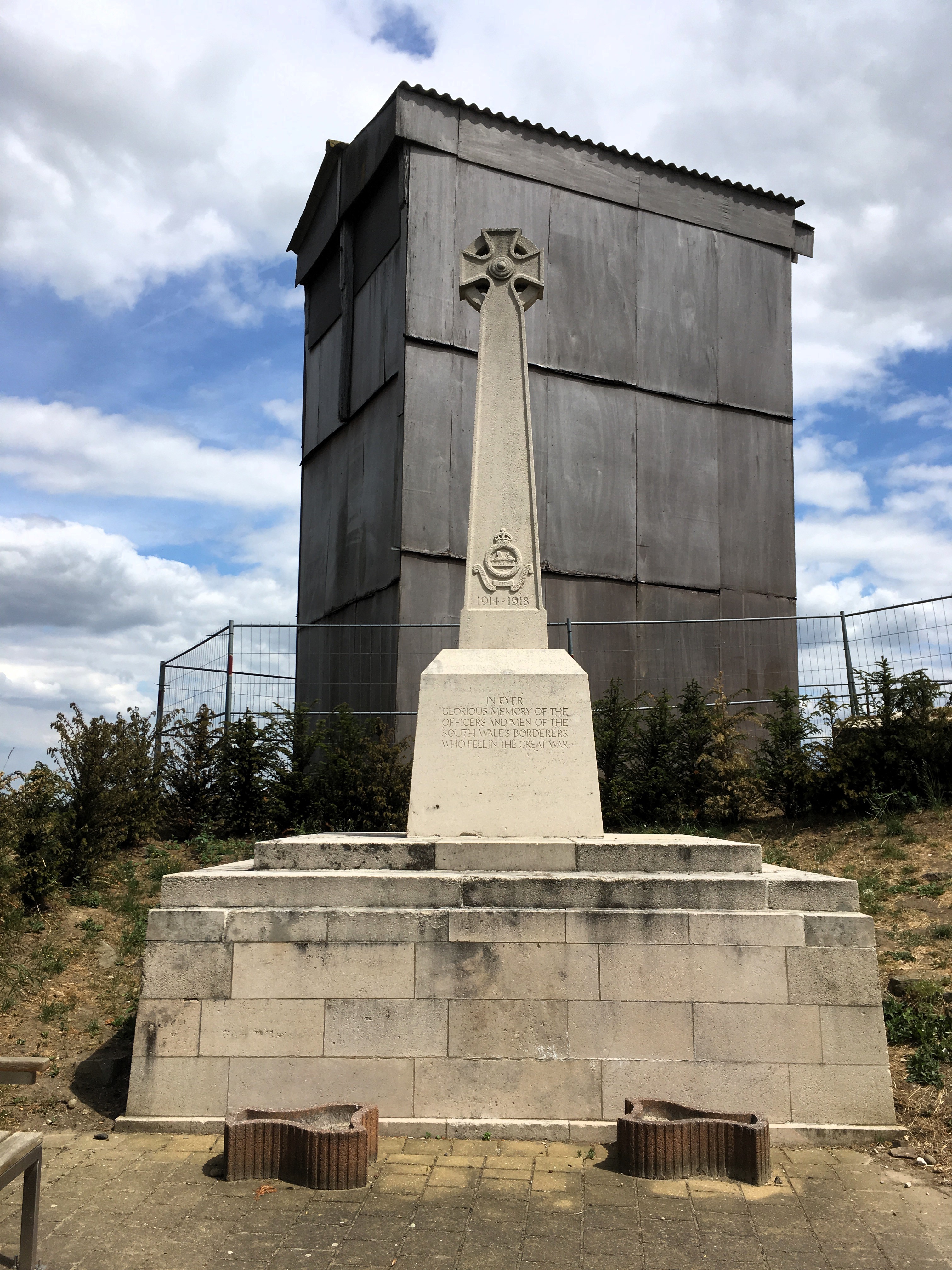
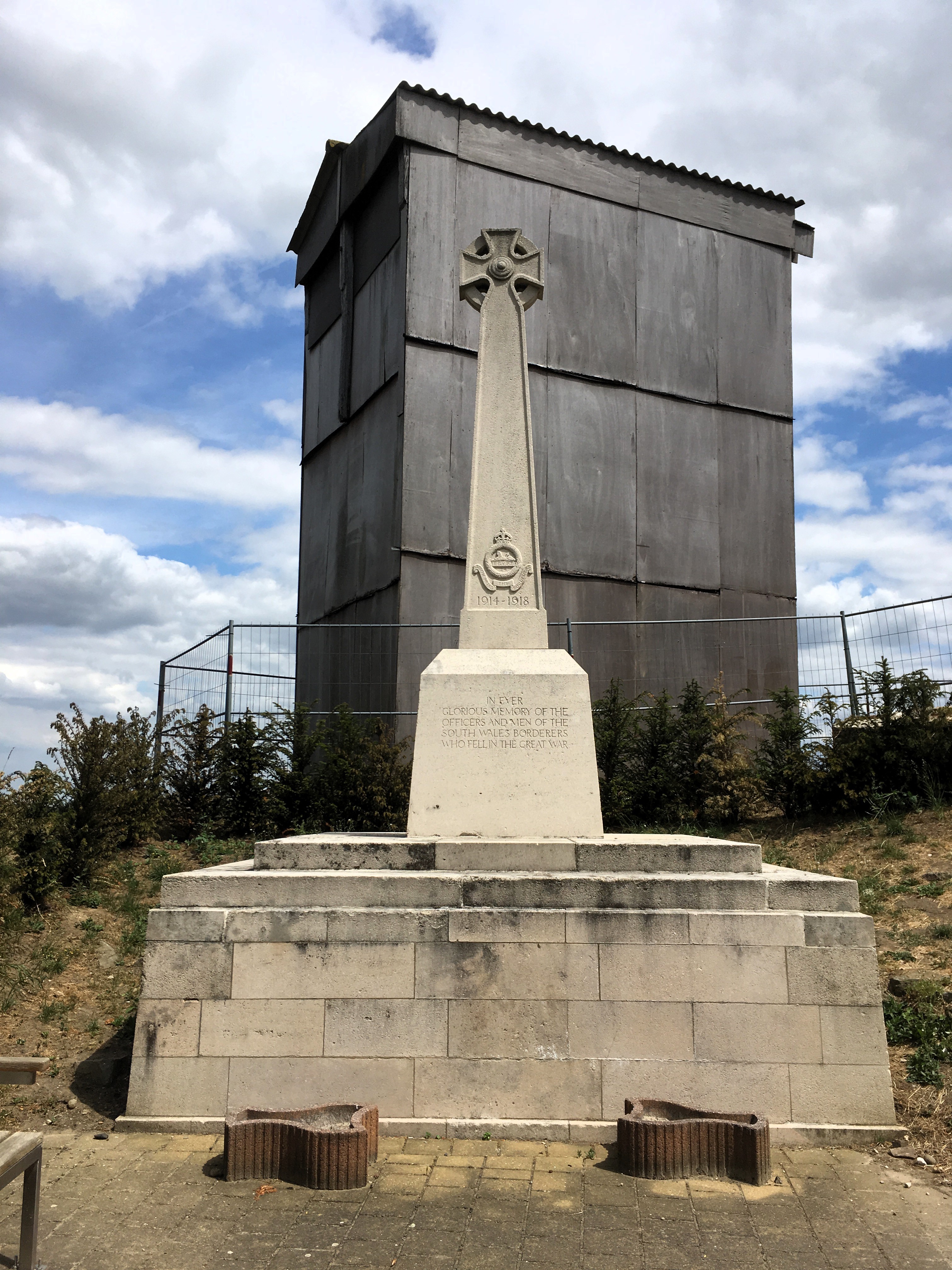
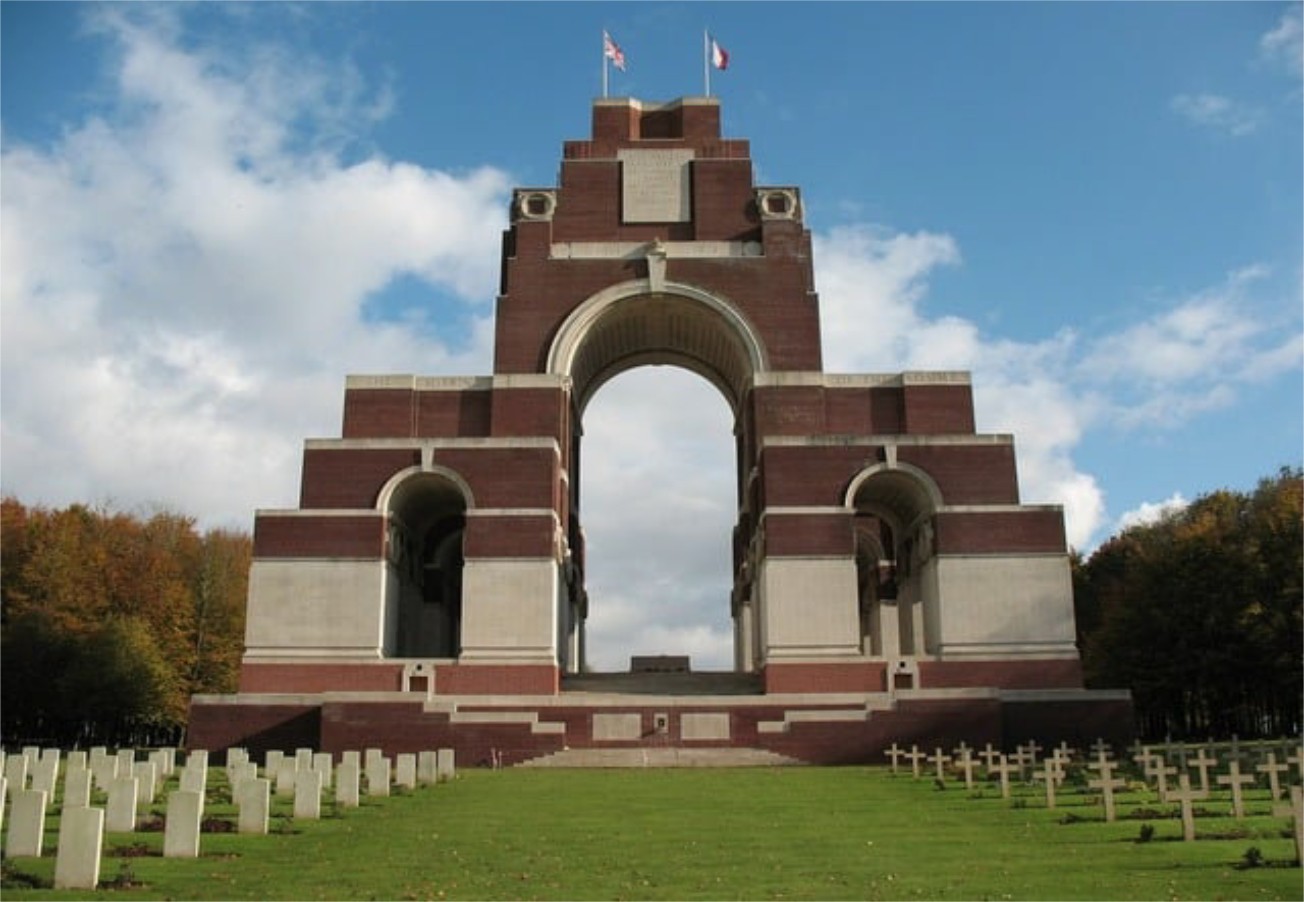
On the Sunday morning of 19 May 1929, a ceremony took place in the Belgian village of Gheluvelt, some six miles east of Ypres, in which General Sir Alexander Cobbe unveiled the South Wales Borderers memorial, and the Bishop of Swansea and Brecon dedicated it. A copy of an ancient Celtic Cross at Carew, Pembrokeshire, the memorial is powerful for its modest simplicity.
The cross emerges from a tomb-like plinth, and the base of the cross contains an equally simple inscription which grips the imagination because it is a perfect example of the less is more ethos: ‘In ever glorious memory of the officers and men of the South Wales Borderers who fell in the Great War’. One adjective – glorious – does the job. It tells us that this is a military memorial for a military community. The dead live in the memory because of the honour they added to the glory of the regiment. The location of the memorial also tells us much about the way the regiment ranked battlefields, for to commemorate all its ranks who fought in many battles across all fronts, here, the Ypres battlefield, was chosen as the primus inter pares.
Drill down a little further, and it also tells us that the First Battle of Ypres was regarded as the acme of its achievements in the conflict, and its pre-war professional soldiers were the essence of the regiment. This implicit message was made explicit by General Cobbe in his address. He noted that Gheluvelt was ‘where the 1st Battalion [the pre-war regulars], reduced and at a loss of three-quarters of their strength, achieved victory over an overwhelming hostile attack in the early days of 1914.
Although the action which then took place was fought by the 1st Battalion, this spot has been selected by the Regiment as emblematic of the fortitude, gallantry, and devotion of all the Battalions of the South Wales Borderers in the Great War’.
It shows us that like all memorials, that to the South Wales Borderers at Gheluvelt is a beautiful and intriguing iconographic cipher. The number of signs and messages the memorial contains tell fascinating stories about the way different communities interpreted their experience of the Great War.
Let’s look at the hidden messages of some of these memorials together.