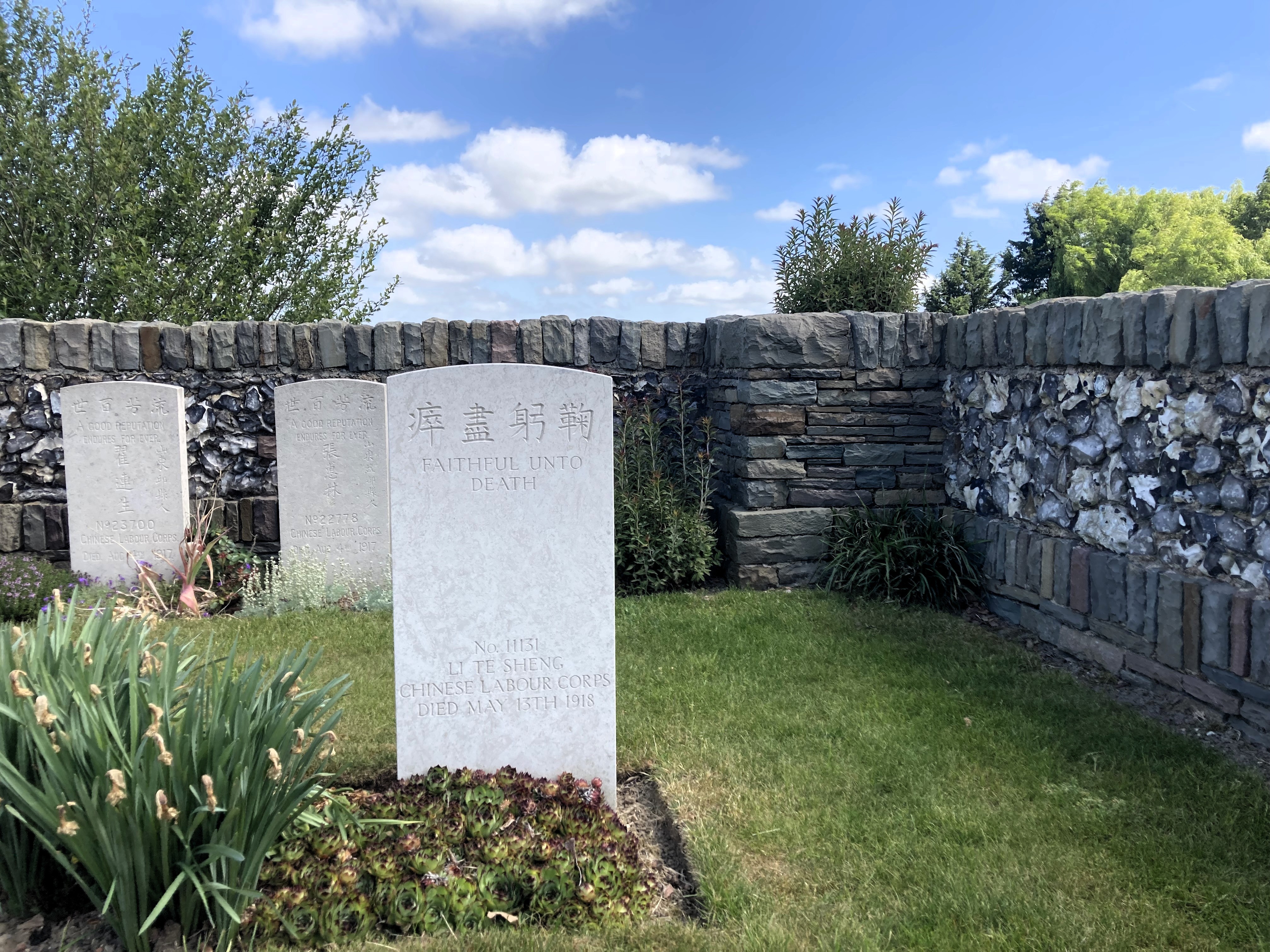
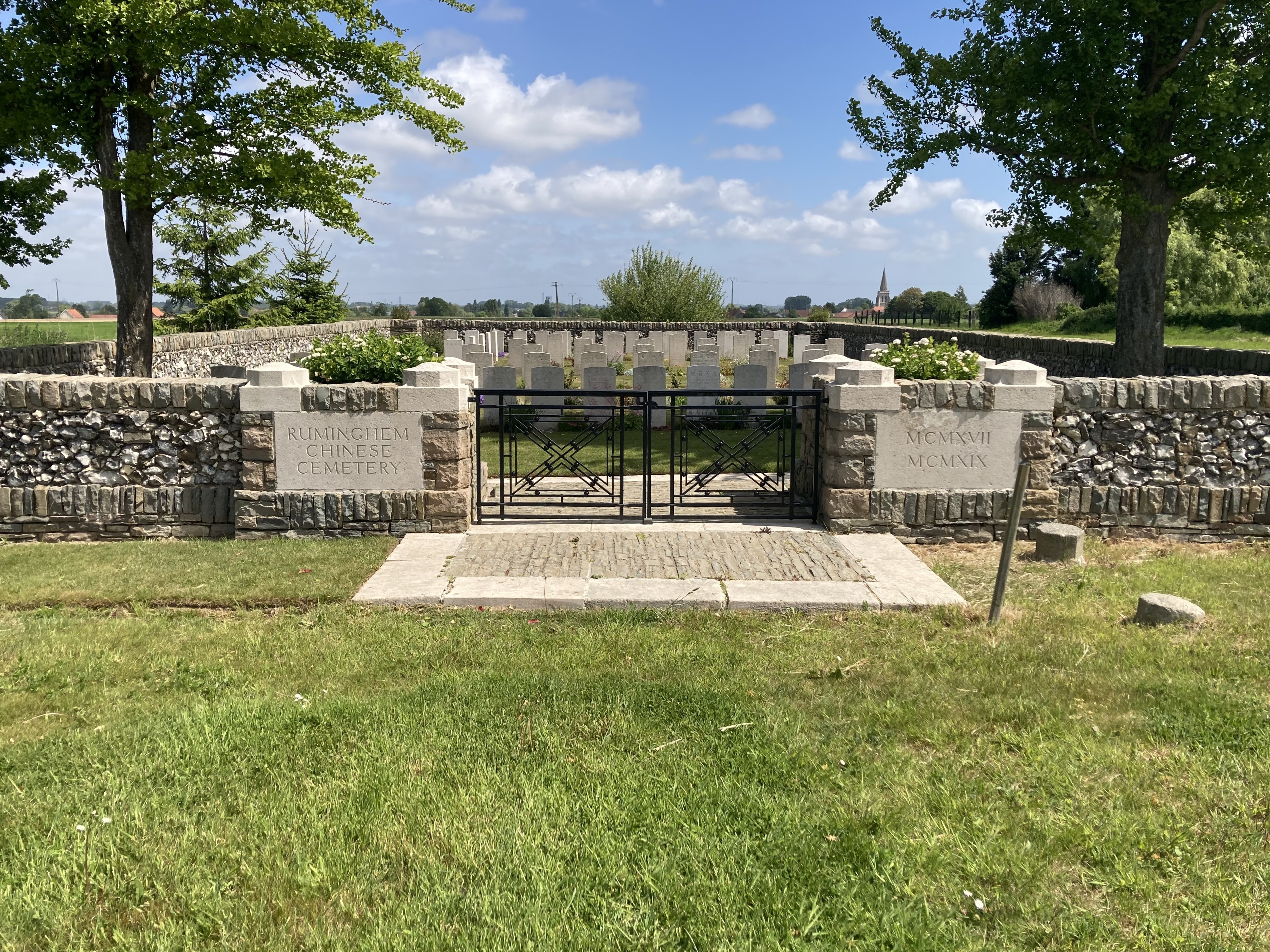
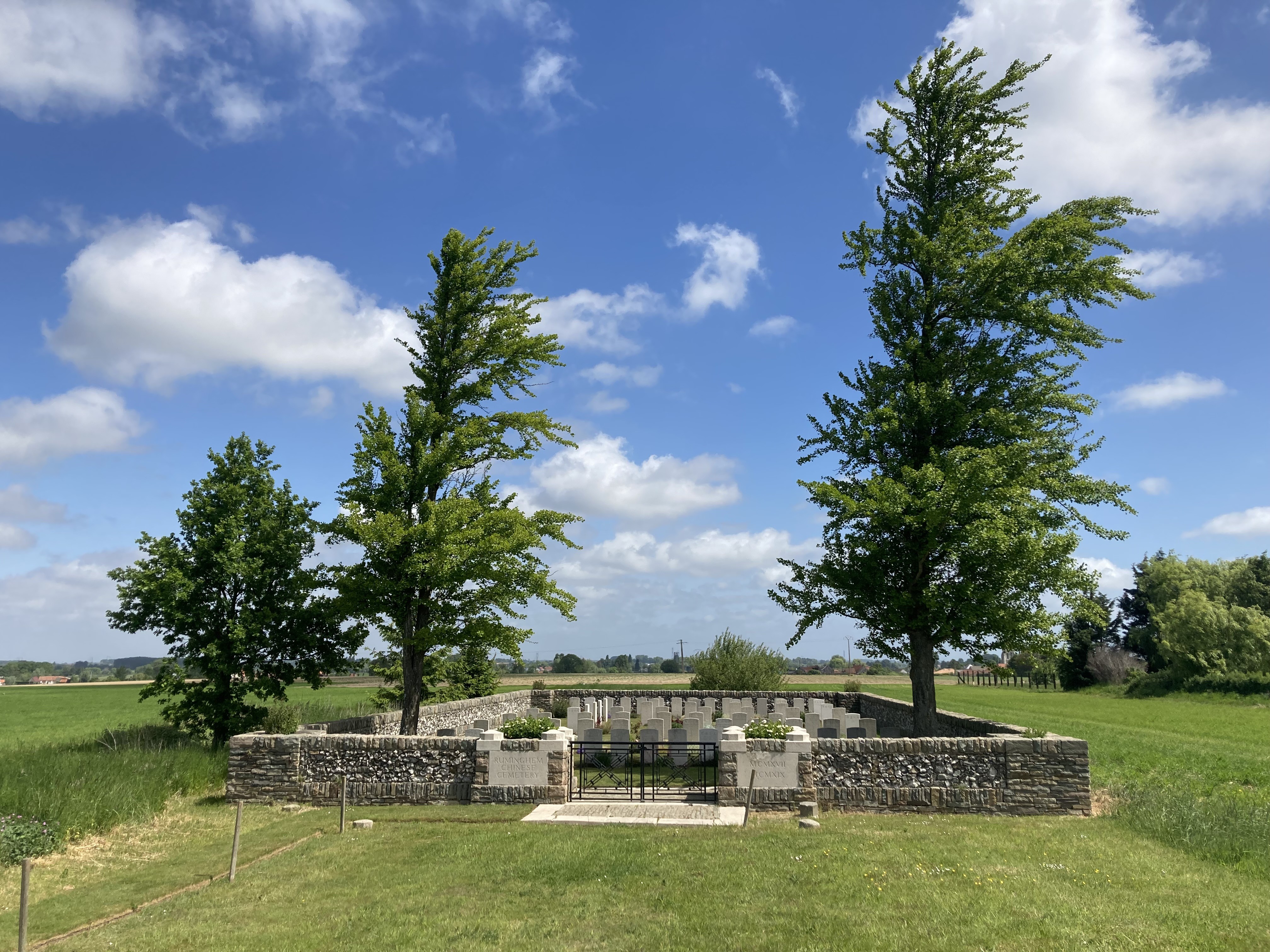
Deep in Pas de Calais, deep in what was the rear area of the trench lines, is the tiny village of Ruminghem. Visiting Ruminghem requires a very definite decision. It means making an effort, for it is not a place you happen to pass-by on the way to one of the Great War battlefields. As a consequence, few people seem to pass this way. Of course, the cemetery’s very location reveals much about the role of the men buried here. As members of the Chinese Labour Corps, the majority of their work was behind the lines. The only way military operations could be maintained at the front was through the blood, sweat, and, doubtless, tears too, of a myriad of ancillary services unloading, building, repairing and hauling to and from the frontlines. Ruminghem was the headquarters of No. 11 Labour Group and the home of a Chinese hospital, hence the cemetery.
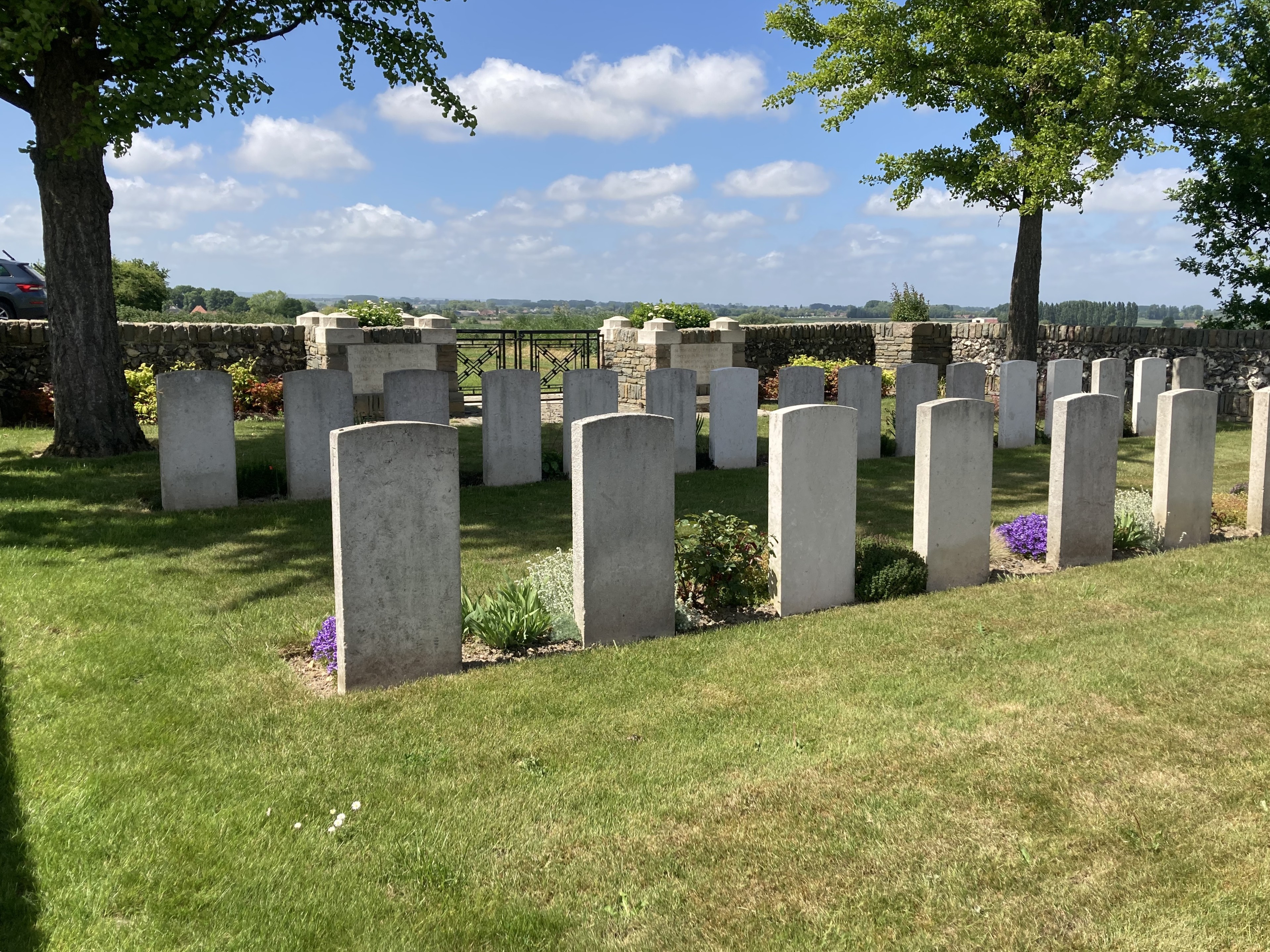
For the visitor who has gone to the time and trouble of seeking out the cemetery, the initial sensation might be one of disappointment. There it is, tucked away at the end of a narrow country road-cum-track on the western edge of the village, and it turns out to be nothing more than a simple square containing only 75 graves. But the glories of its deliberate modesty soon begin to work their magic. Restraint, ornamentation and detailing stand out all the more strongly creating the most beautiful of effects.
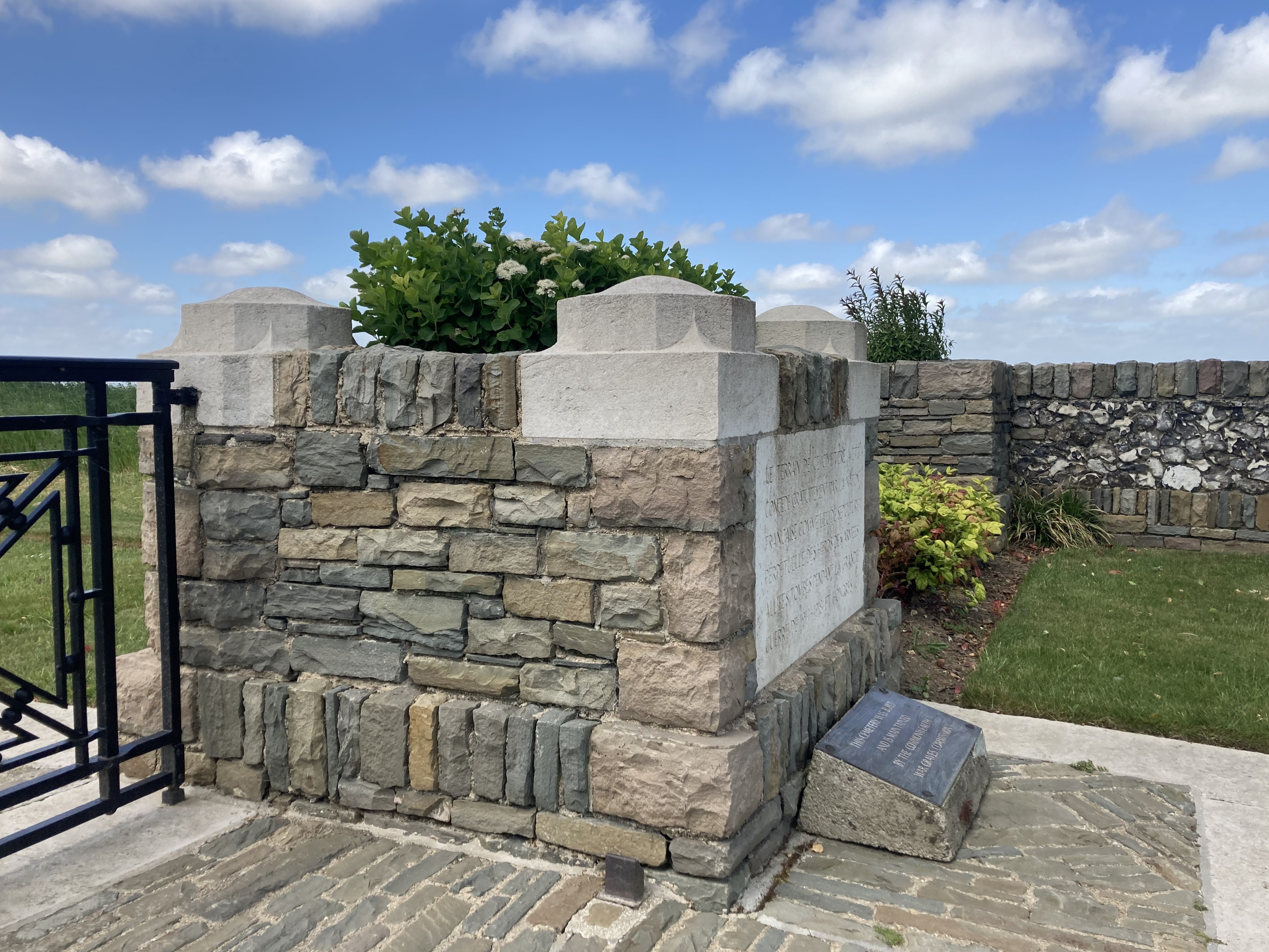
The first thing that catches the eye is the low retaining wall. It is made of coarse rubble (almost certainly Gris de Poulseur stone, which was the IWGC’s usual option for rubble work) and coping courses with flintwork in-between. It has an Arts and Crafts feel, leading me to suspect W.H. Cowlishaw as architect, and adds a dash of fusion to the whole thing – Chinese graves behind a typical English country house wall. (Like Chinese tea; blended in England and placed in a lovely caddy.) The gate piers are the next glory. These are in the form of planters containing the Euville stone (or possible Pierre de Lens limestone) panels carved with the cemetery name.
At the four corners of the two pier-planters are octagonal caps in Euville. These are absolutely beautiful little features, ratchet-like in nature, almost as if the architect was saying, ‘I know many of you chaps in here worked with tools, and so I am going to give a socket spanner top to your gate piers. You’ll know what to do if they need tightening.’ The wrought iron gates are of the most elaborate of the standard IWGC patterns bringing a dash of Roman classicism to the place. But here grandeur is played differently for as everything is so low, the sense of this being a deliberately created miniature becomes all-encompassing. Step inside and the seven rows of graves are fully seen. At the corners of the back wall are two planters. Like those in the gate piers, they contain evergreens. Life everlasting at front and rear. Life everlasting surrounding these men who did so much to ensure allied victory in the Great War.