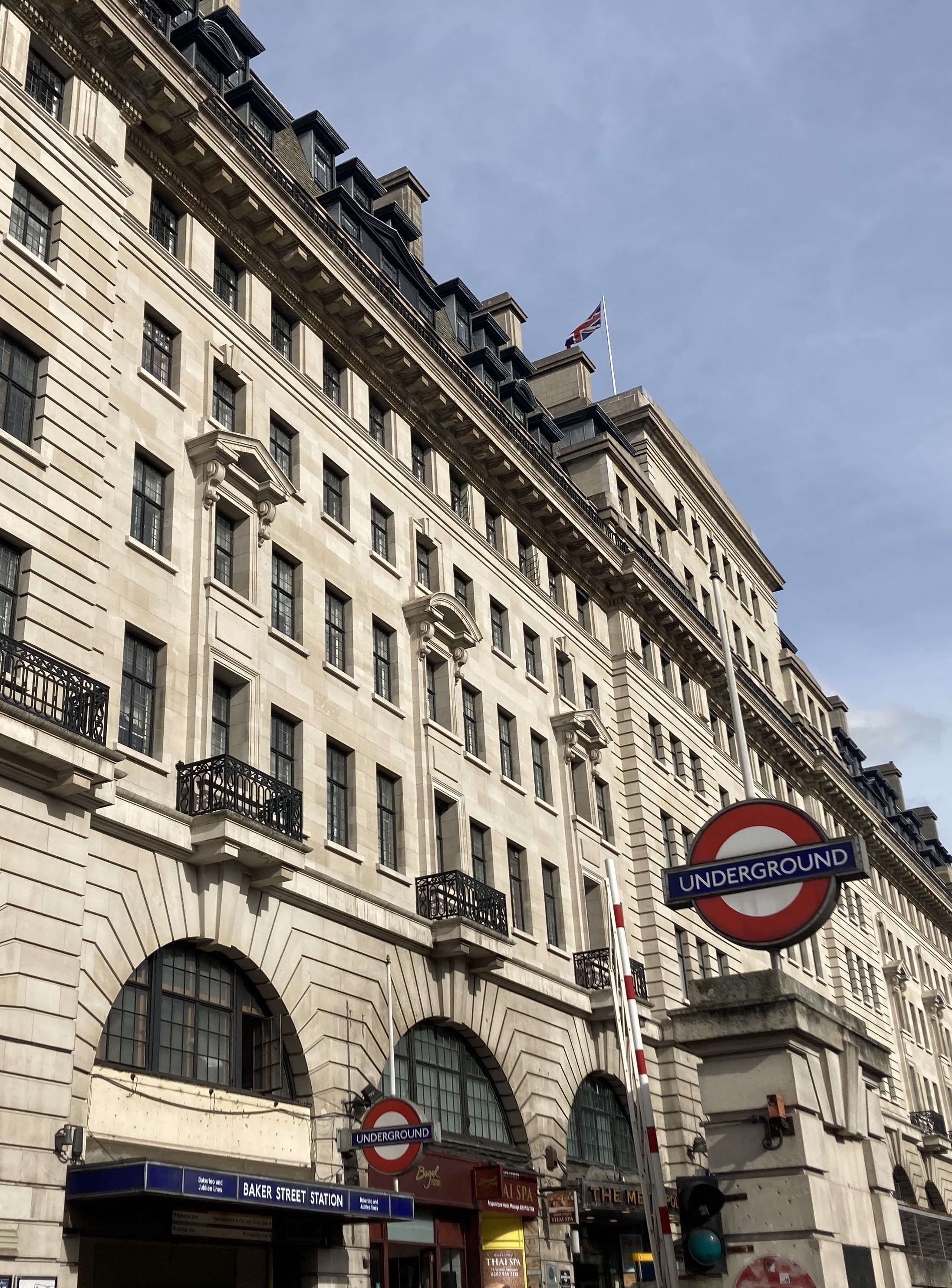
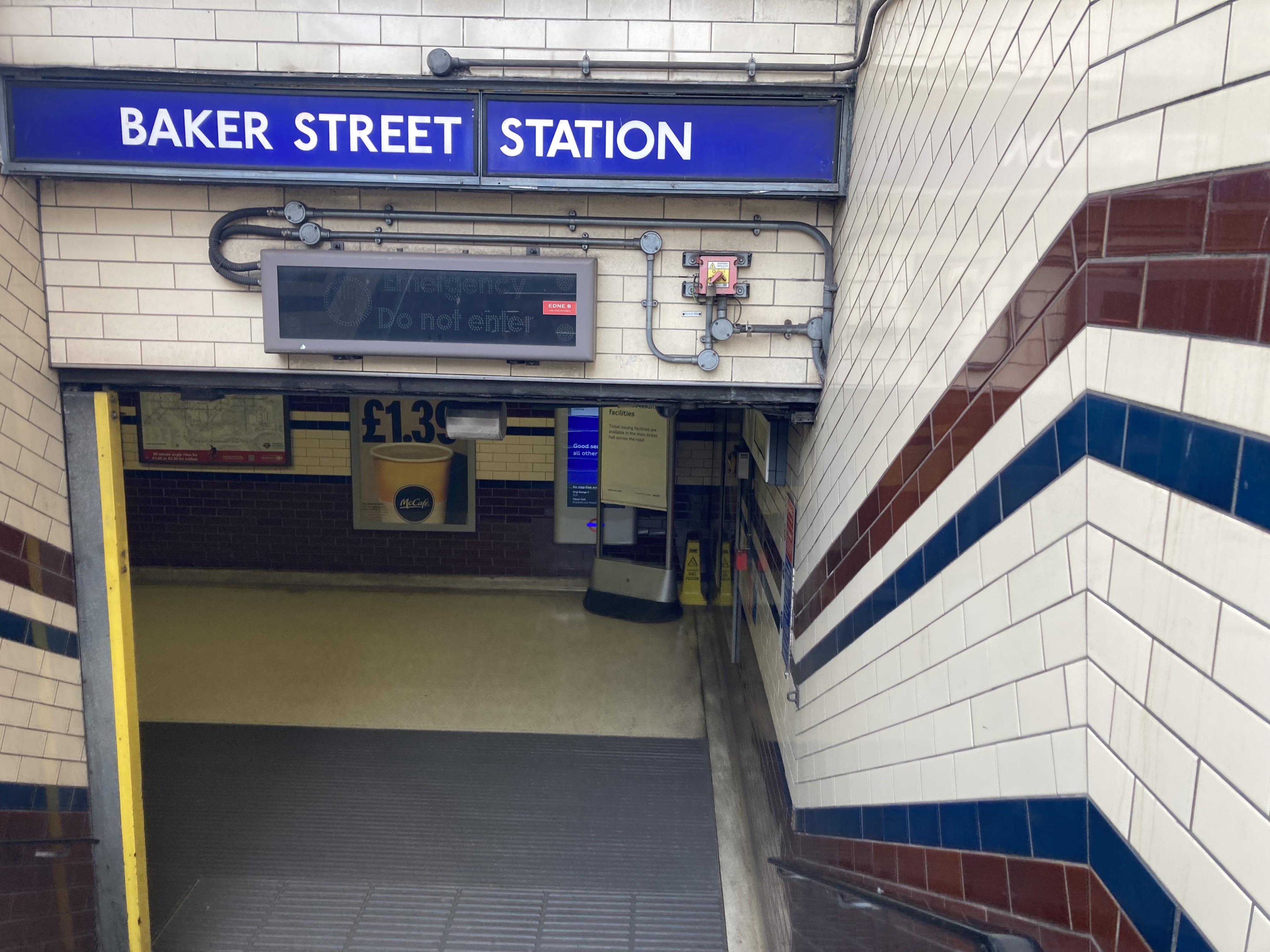
More than anyone else it was John Betjeman, in his poem The Metropolitan Railway and his wonderful 1973 documentary Metro-land, who did so much to raise awareness of the wonder of Baker Street station. Originally, this great barrack of a building standing at the corner of Baker Street and Marylebone Road was nothing more than two modest stone buildings on each side of Marylebone Road. These buildings served Bayswater Paddington, and Holborn Bridge Railway Company, which by the turn of the century had evolved into a huge concern, the Metropolitan Railway. Full of ambition, the company decided that Baker Street station should become the lynchpin of its operations and launched an ambitious development programme. Frank Sherrin, architect and son of the Metropolitan Railway’s consulting architect, George C. Sherrin, was asked to draw up plans. In turn, these were handed on to Charles W. Clark, who was appointed architect to the Railway in 1911. Having finalised a vision for the station, work was then heavily disrupted by the outbreak of war in 1914 and not fully completed until 1930. But what Clark created is magnificent.
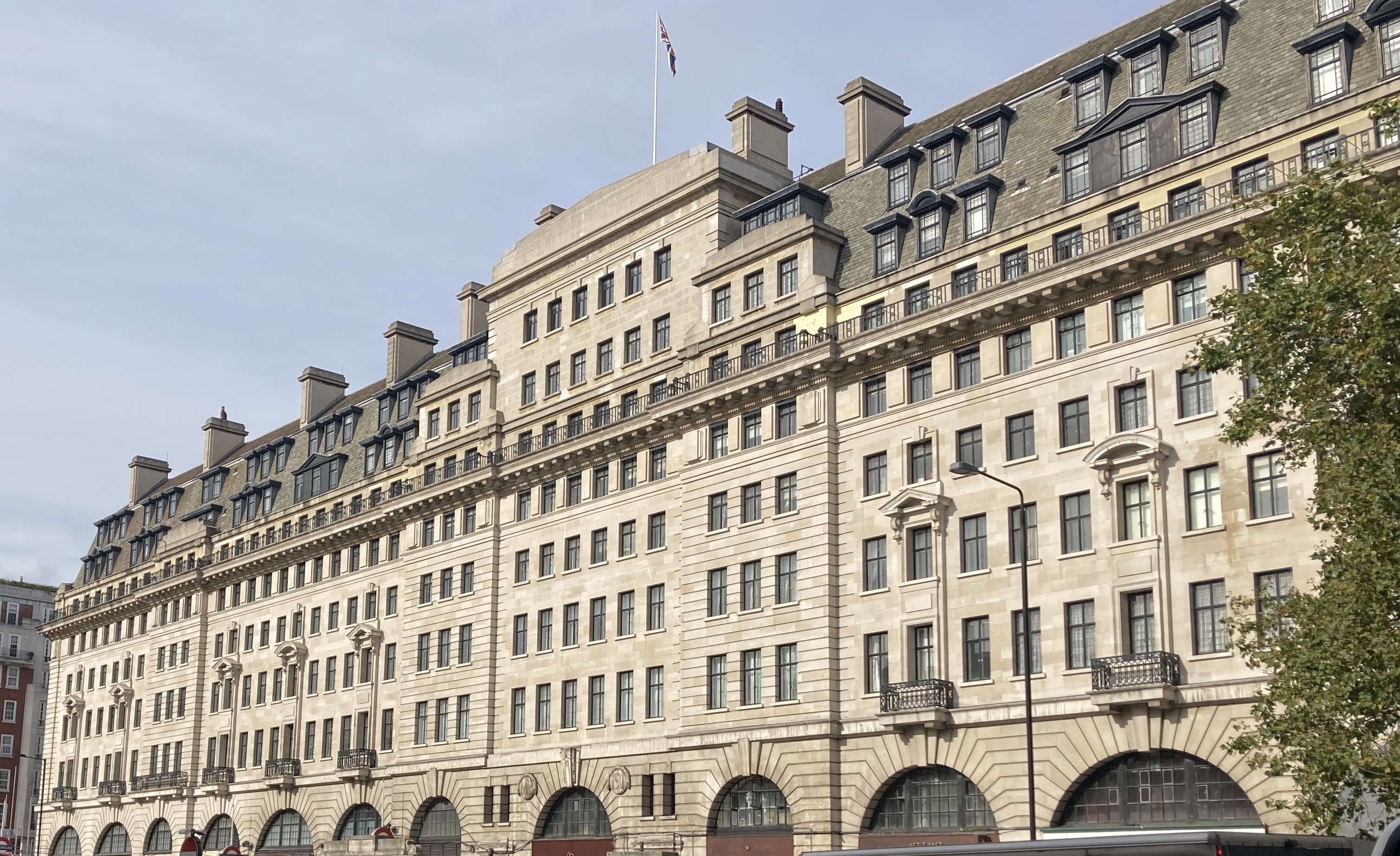
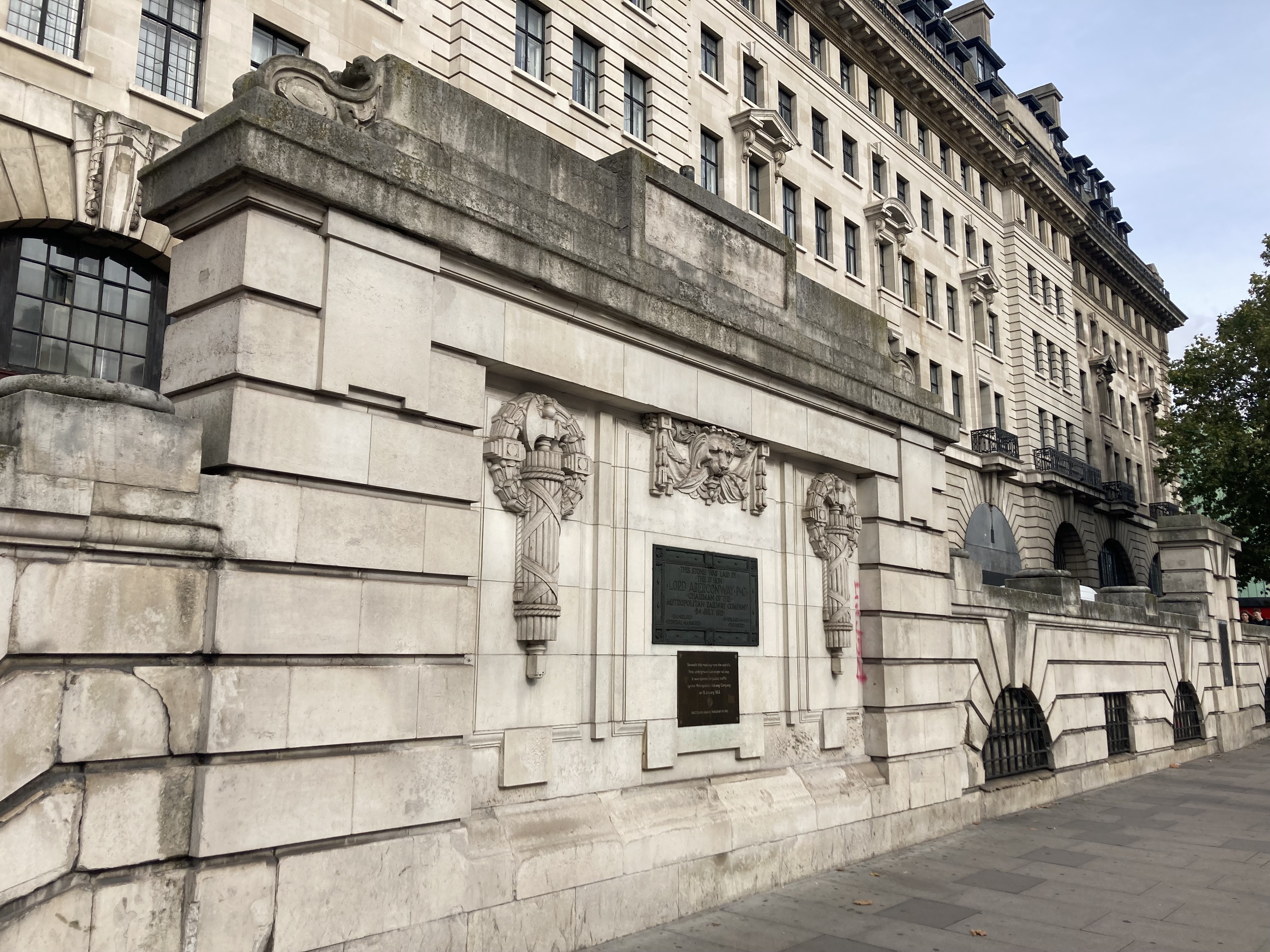
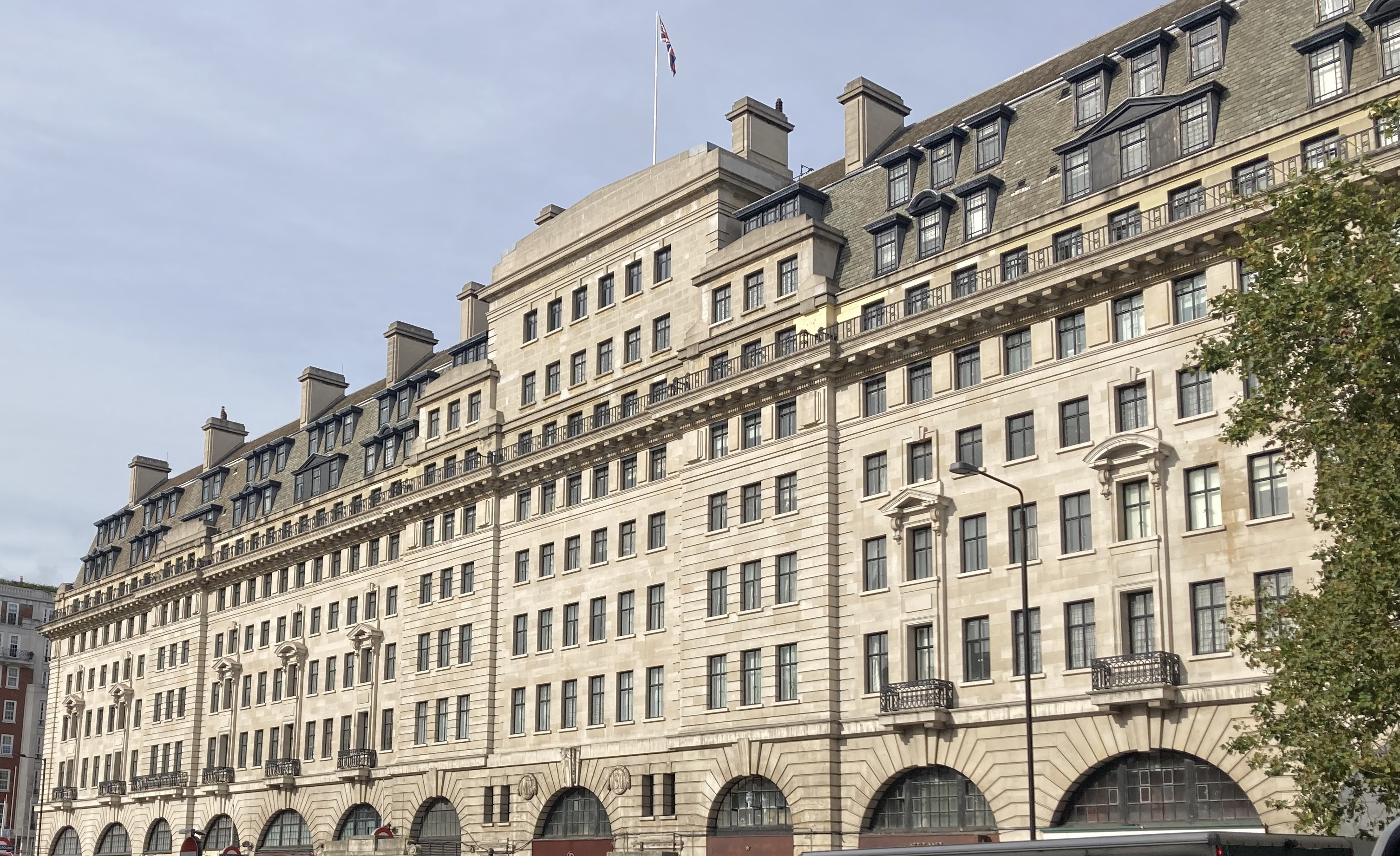
Our experience of the station starts with an ascent up an access road on the north side of Marylebone Road. Originally this led to a majestic port-cochére supported by Tuscan columns. Sadly, this feature has been removed, but its ‘shadow’ can be easily detected, as seen in the image above. Within the station there is a sumptuous ticket hall of off-white tiling and plaster corniced ceilings, which makes it feel like the lobby of a grand bank or hotel. Step back out onto the street and the stripped classicism of the great Portland Stone building overwhelms, for this hugely long and high elevation of the station building is Chiltern Court, a vast apartment block designed to ensure a constant flow of rents into the Railway’s coffers. To appreciate the view fully it is best to cross to the southside of the road and take in this immense façade and how it is broken up by rusticated and recessed sections as well as false balconies and porticos.
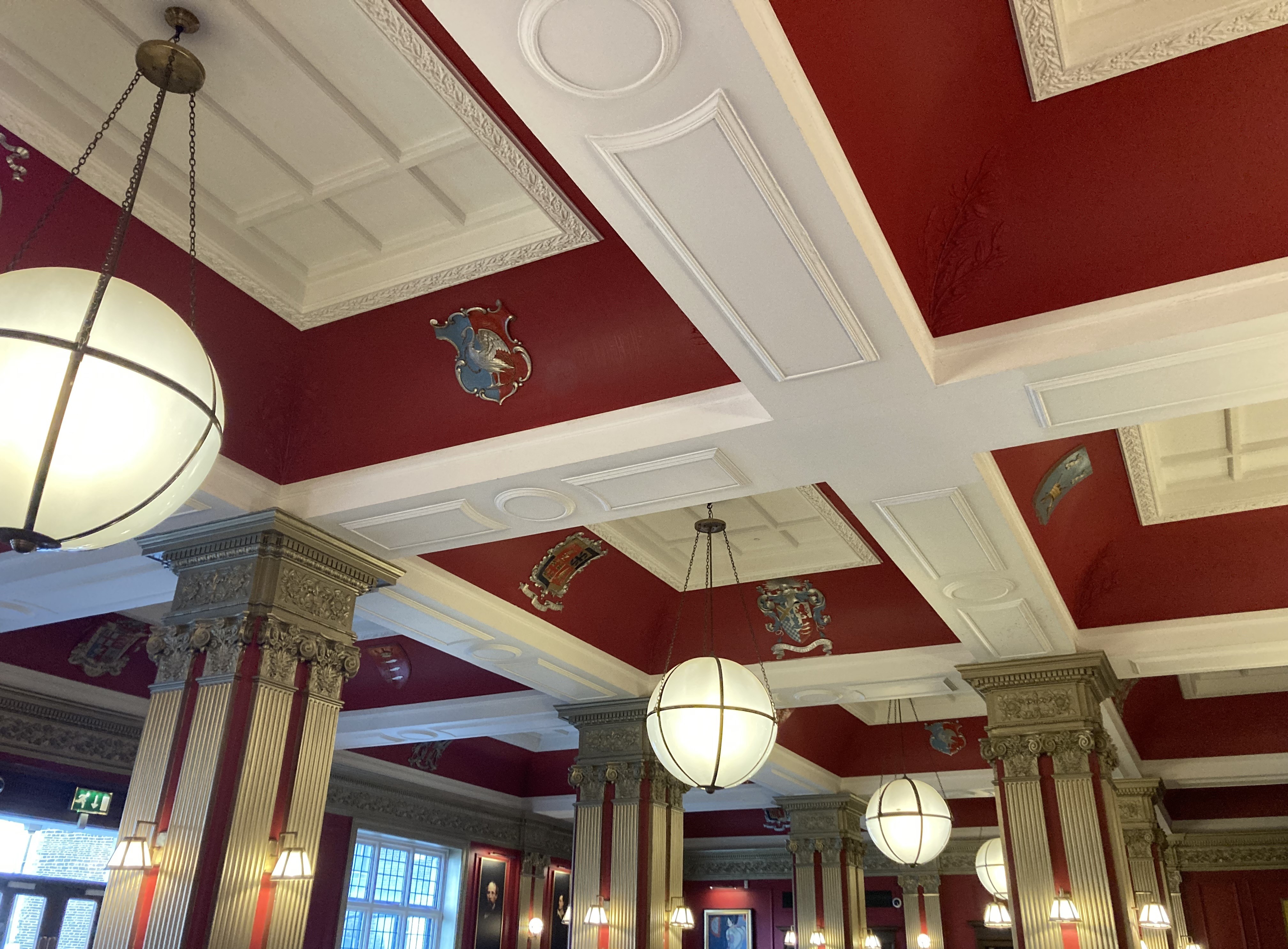
Having lavished attention on these wonderful elements the intimate heart of the building now calls out. This is its deepest secret: the Chiltern Court restaurant. And what a wonder it is. Now called the Metropolitan Bar and run by Wetherspoons, its original glory is still perceptible. Although the fumed oak is now painted over, the gilded plaster Corinthian columns and ceiling remain complete with the decorative crests representing the districts served by the Metropolitan Railway and the bosses around the hanging lamps are where the original recessed lighting was housed behind metal grilles. It’s worth settling down with a pint just staring around and imagining those suburban housewives Betjeman told of who waited here for their husbands to come up from Cheapside or Mincing Lane, ‘and while they waited, they could listen to the strains of the band playing for the thé dansant before they took the train for home’.
Come with me on the Circle Line walk and we can examine this great building together, maybe even have a pint and let our minds conjure up a band playing a genteel waltz.