During my childhood in the 1970s, one of the great treats of our regular Saturday visits to my grandparents in Hoxton was the chance to walk down Old Street and turn into Aldersgate Street. For a budding historian it was a treasure box of delights. There was the cobbled quaintness of Charterhouse Square, the butcher’s shop smells of sawdust and meat wafting up from Smithfield, the sounds of tube trains trundling along the open trench from Farringdon, and, in the middle of it all, the Barbican.
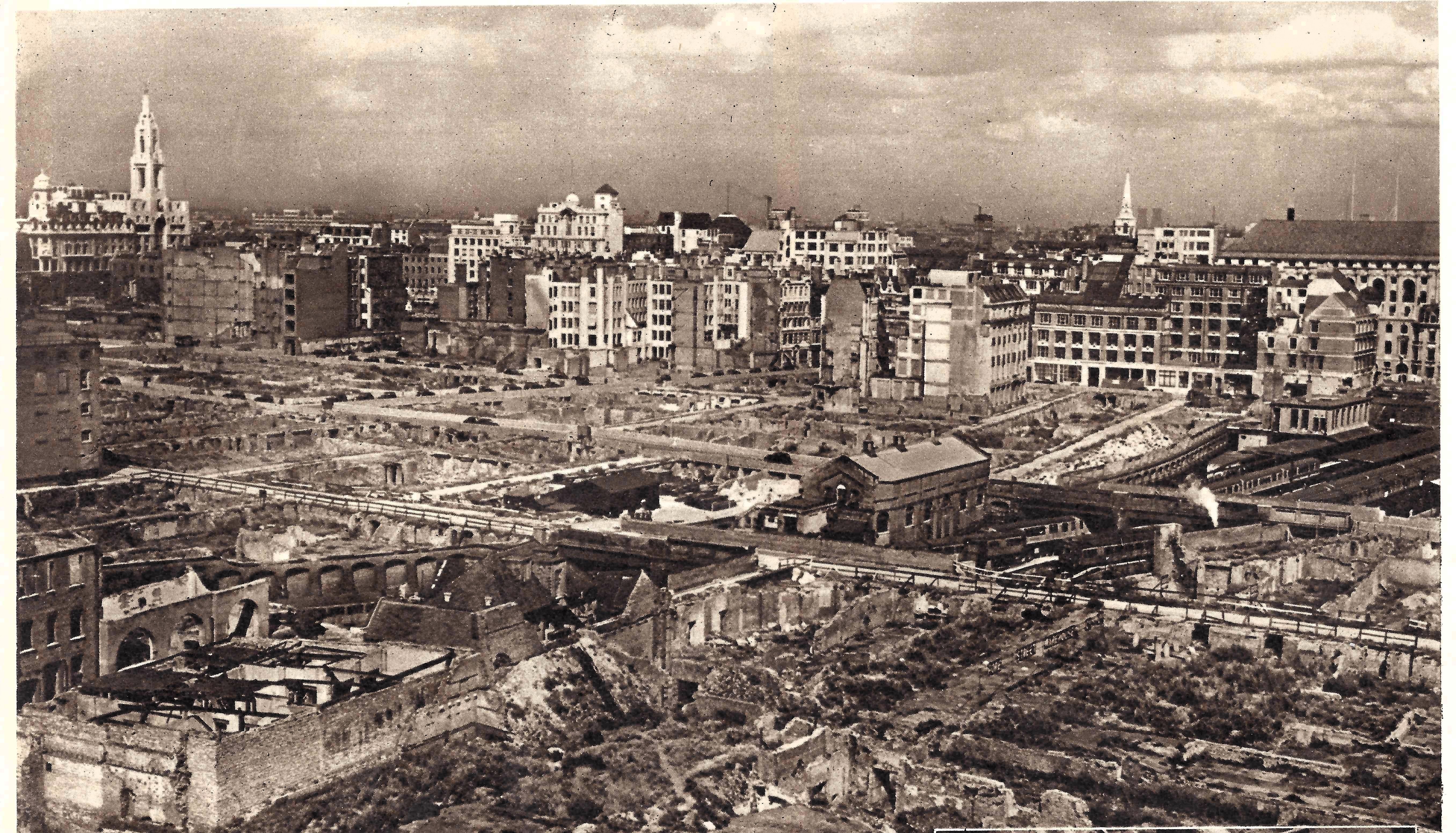
My fascination with the Barbican started then, in the mid-seventies. To me it was Utopia and Dystopia at exactly the same time. The Utopia was the brave new world emerging boldly upwards in great stretches of concrete and brick. The Dystopia was the surreal weirdness of it all, the weirdness of Second World War bomb craters flimsily fenced off, but with so many gaps in the fencing that the wartime devastation could so easily be seen and imagined. As we walked past, my dad would nearly always chip in with his stories of climbing up to the roof rafters in bombed houses in Bethnal Green to watch the trains clatter along the viaduct at Cambridge Heath Road. The 1947 Ealing comedy Hue and Cry, set in the bombed ruins of London, was still there, right before my child’s eyes thirty years later.
Bombing devastated and exposed London at the same time. The Luftwaffe accidentally became London’s most dedicated set of archaeologists ripping open the layers of time. What I saw at the Barbican was the Roman London Wall exposed in great sections, the seemingly bottomless basements striped like seaside rock with strata of a city over a thousand years old.
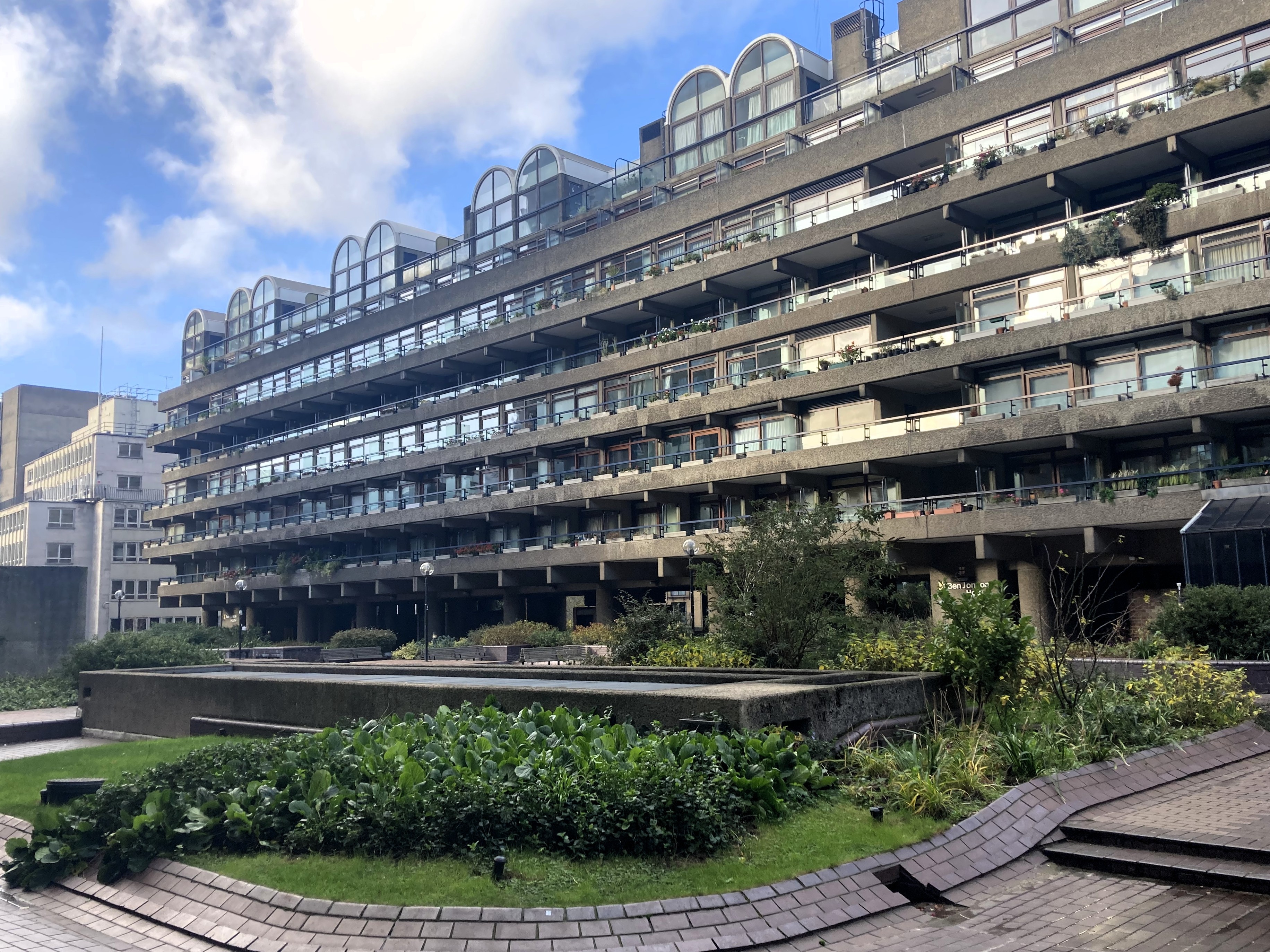
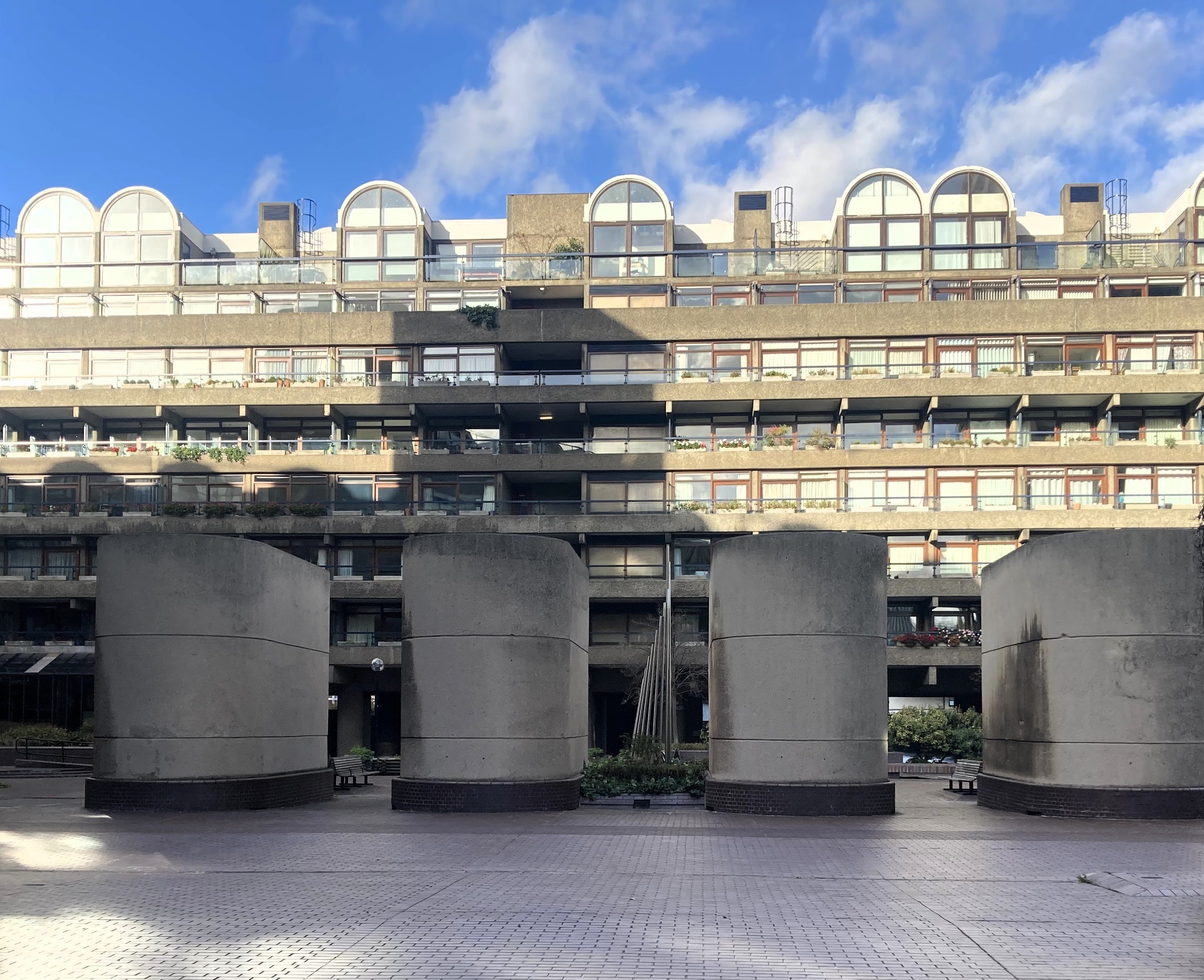
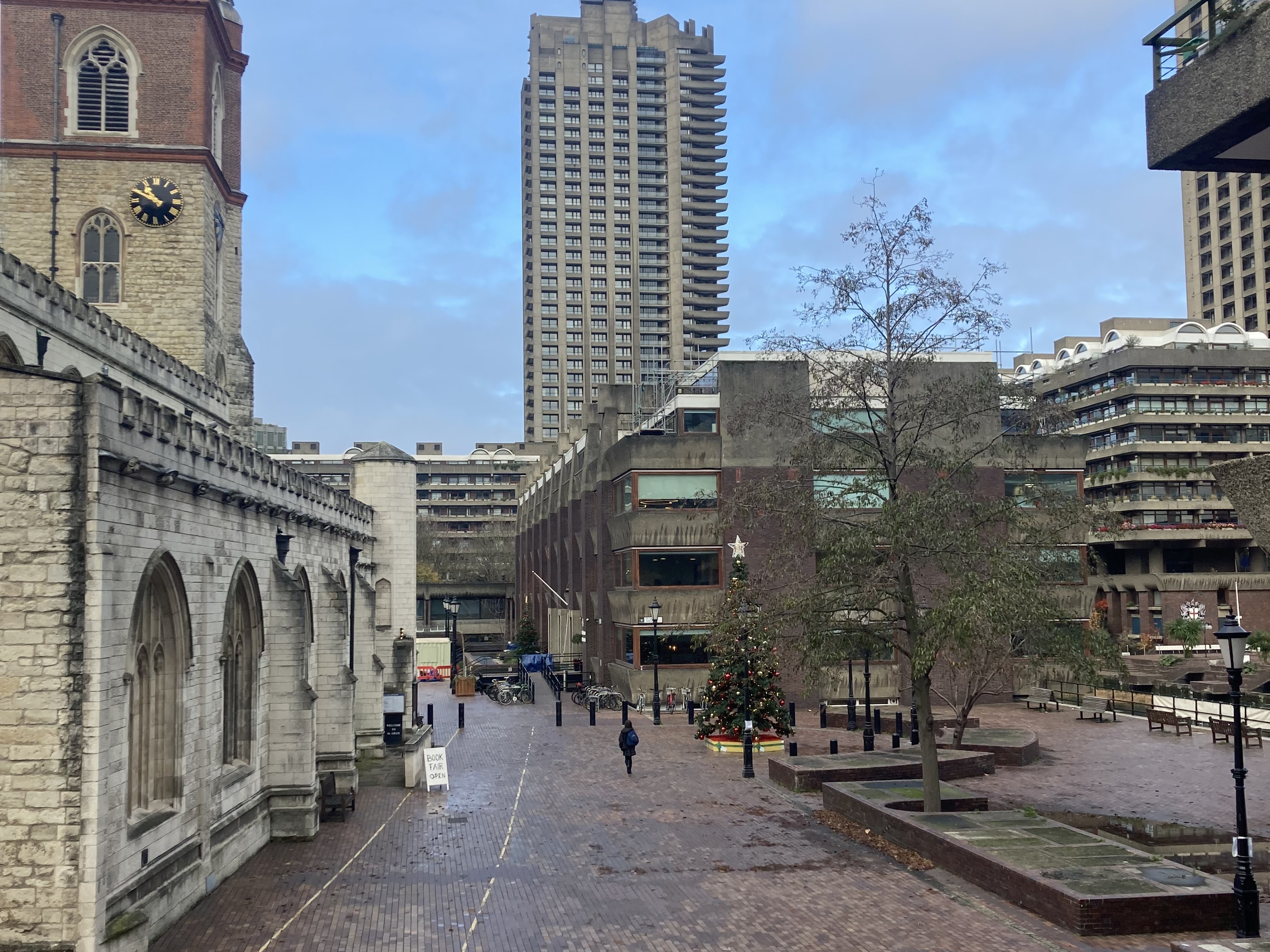
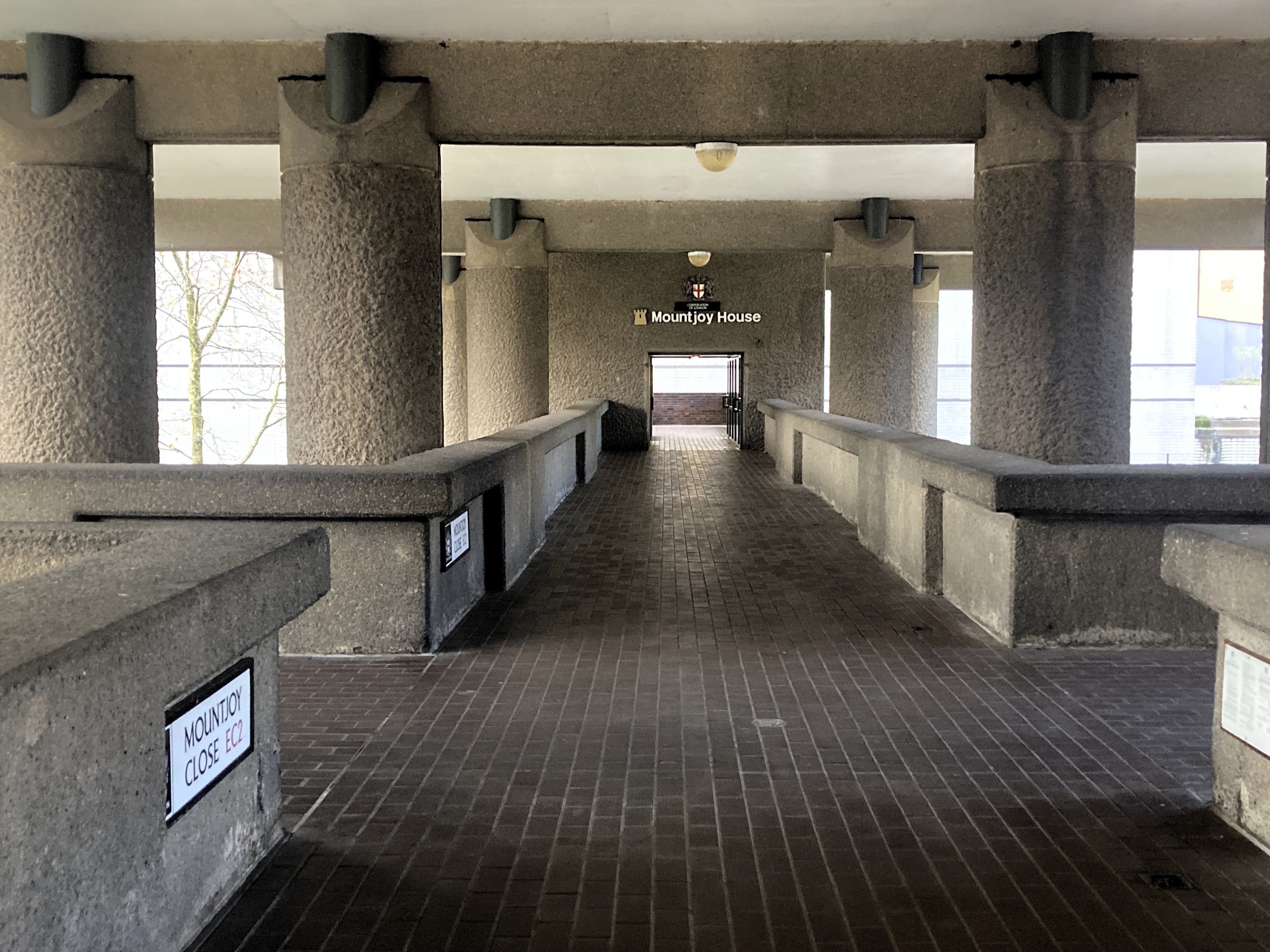
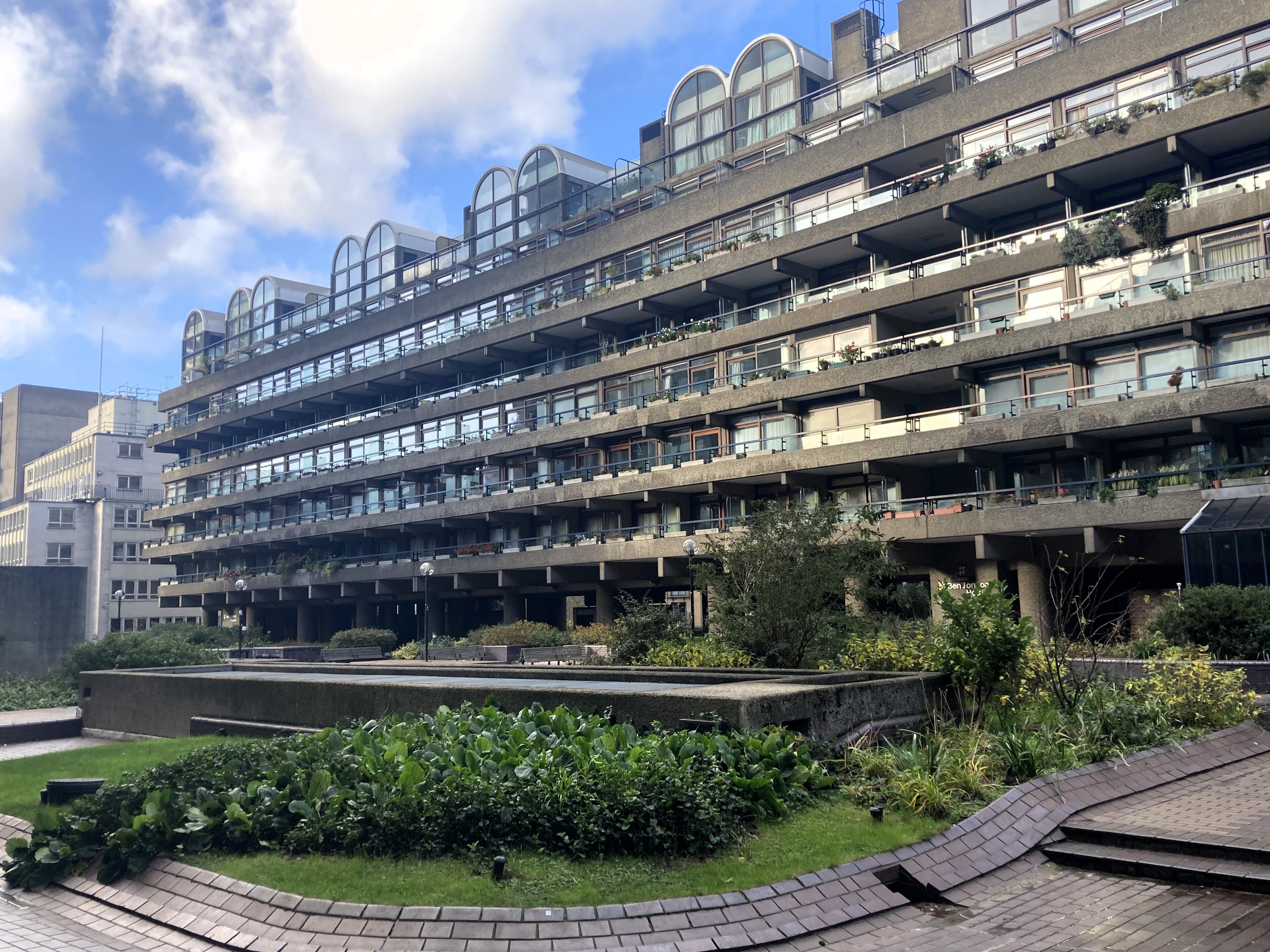
An old world had been exposed, as simultaneously a new one was emerging. Initially outlined as a housing scheme in 1956, the Barbican rebuilding plan was advancing fast by the time I first saw it. Designed by the innovative architectural practice of Chamberlin, Powell and Bon, the bold wonder of the project can still be felt. Seemingly the very definition of modernity, to me the architecture of the Barbican has always felt absolutely rooted in history, in the past. If, as many historians of London have suggested, the city is actually a collection of settlements loosely confederated, then the Barbican is its quintessence. Here great concrete sections, often labelled Brutalist, actually create mini villages. Each housing block is a small settlement in itself, linked to its neighbours by tracks and footpaths, but these are not holloways and broadways in the gloom of forests, but gloriously modernist highwalks progressing through the forest of concrete pillars. And being so high, we walk around the Barbican like Roman sentries on the parapet of London Wall. I well remember standing on The Posten highwalk a day or two before Christmas back in the mid-nineties. Everyone seemed to have quit the City for the festivities. It was dark, quiet, very chilly with a fine mist in the air. Surrounded by the deep richness of the grey-brown-red brick and the chunkiness of the concrete, I was convinced I could hear the slap of Roman leather boots on the paving tiles.
Take a walk with me around The Barbican and allow it to act as a divining rod of London’s history.