Just off King’s Cross Road in the top corner of the parish of Clerkenwell are a square and a circus. Far from the glamorous Upstairs, Downstairs aura of Belgrave, Eaton and Cadogan squares, Lloyd Square and Percy Circus are, nonetheless, gems and are among my favourite places in London. The origins of the development rest in the power and influence of the New River Company. Awarded its royal charter in 1619, it was formed to bring water from Hertfordshire to London and became a significant landowner in Clerkenwell.
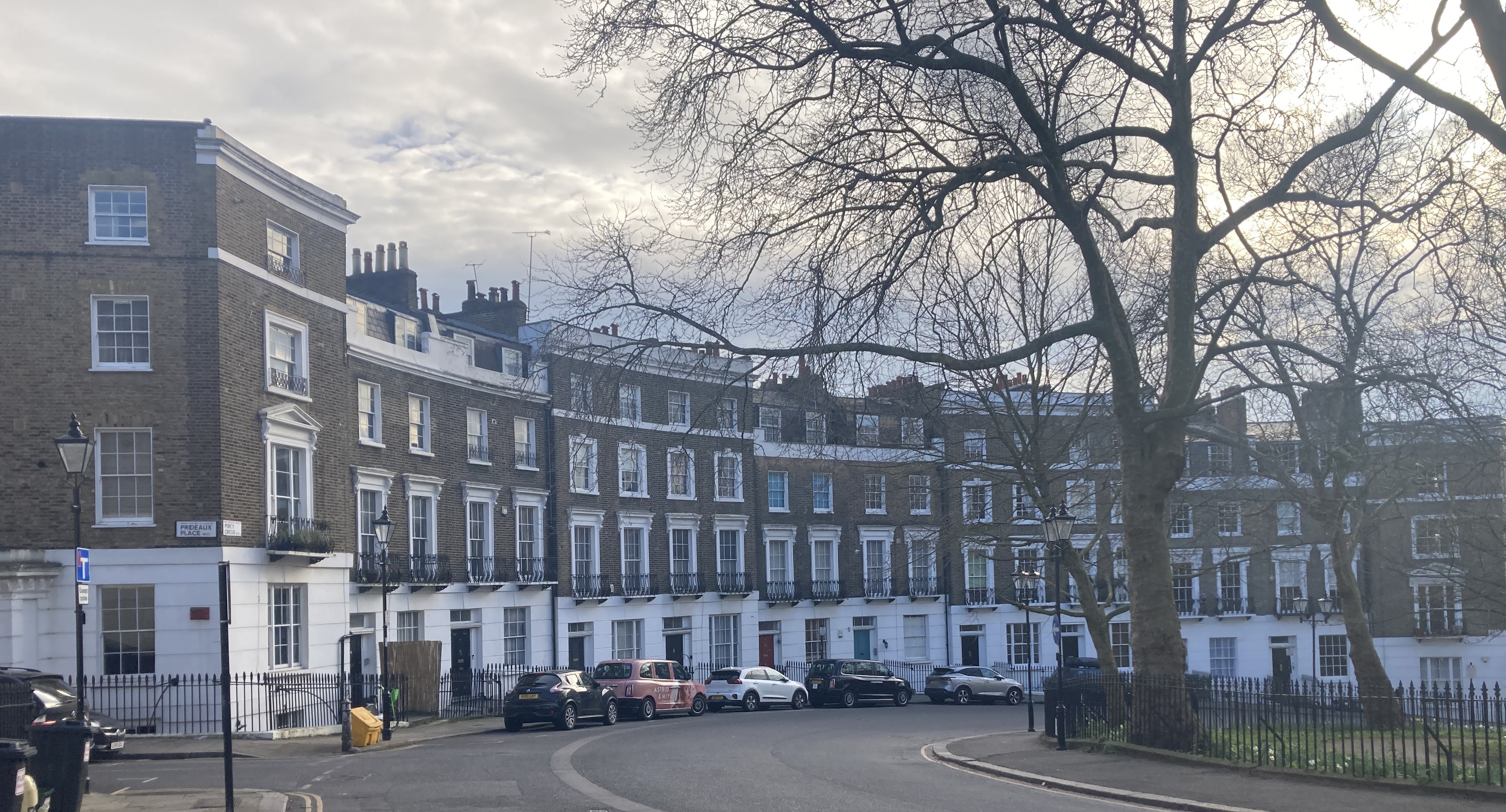
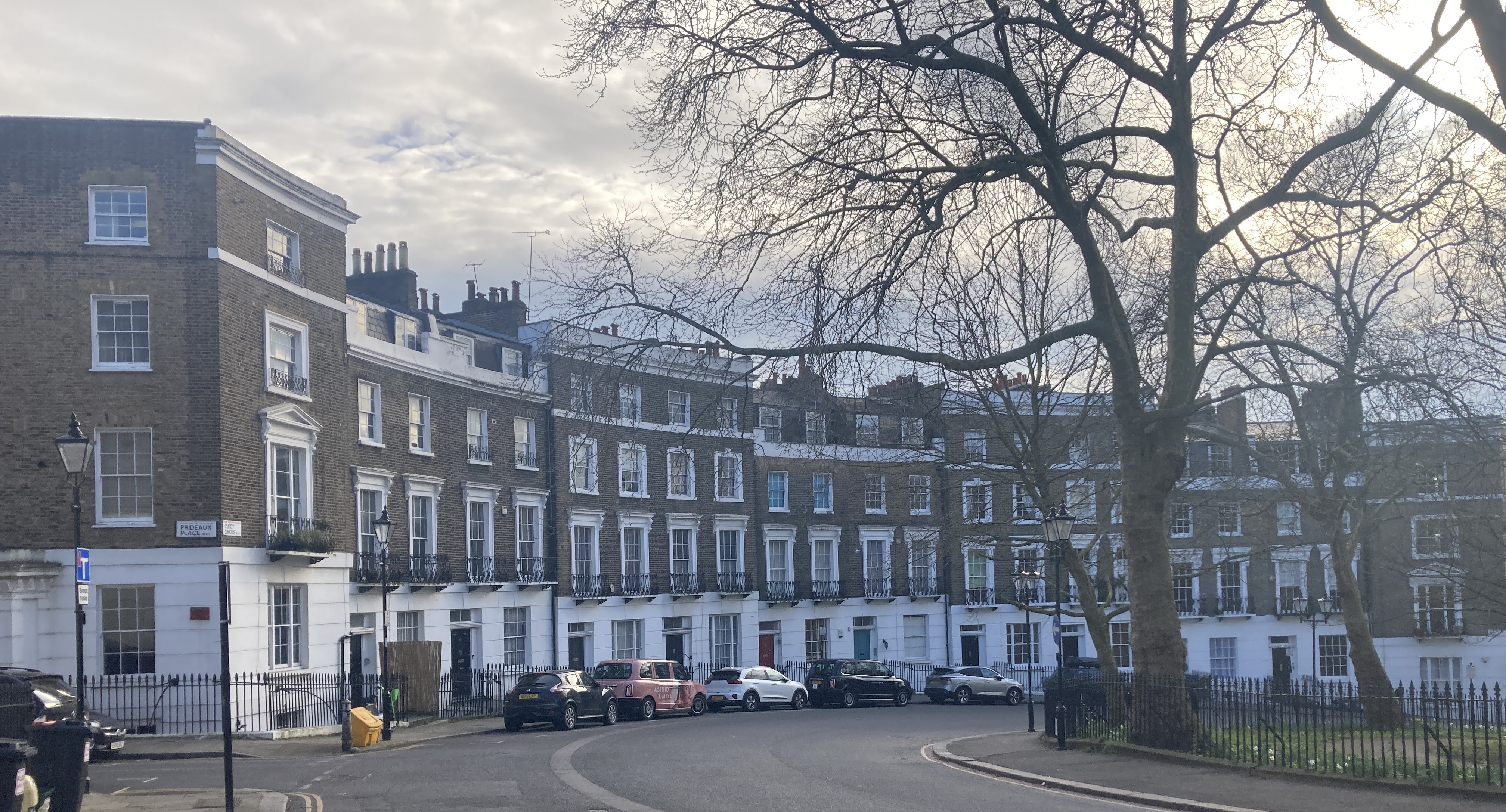
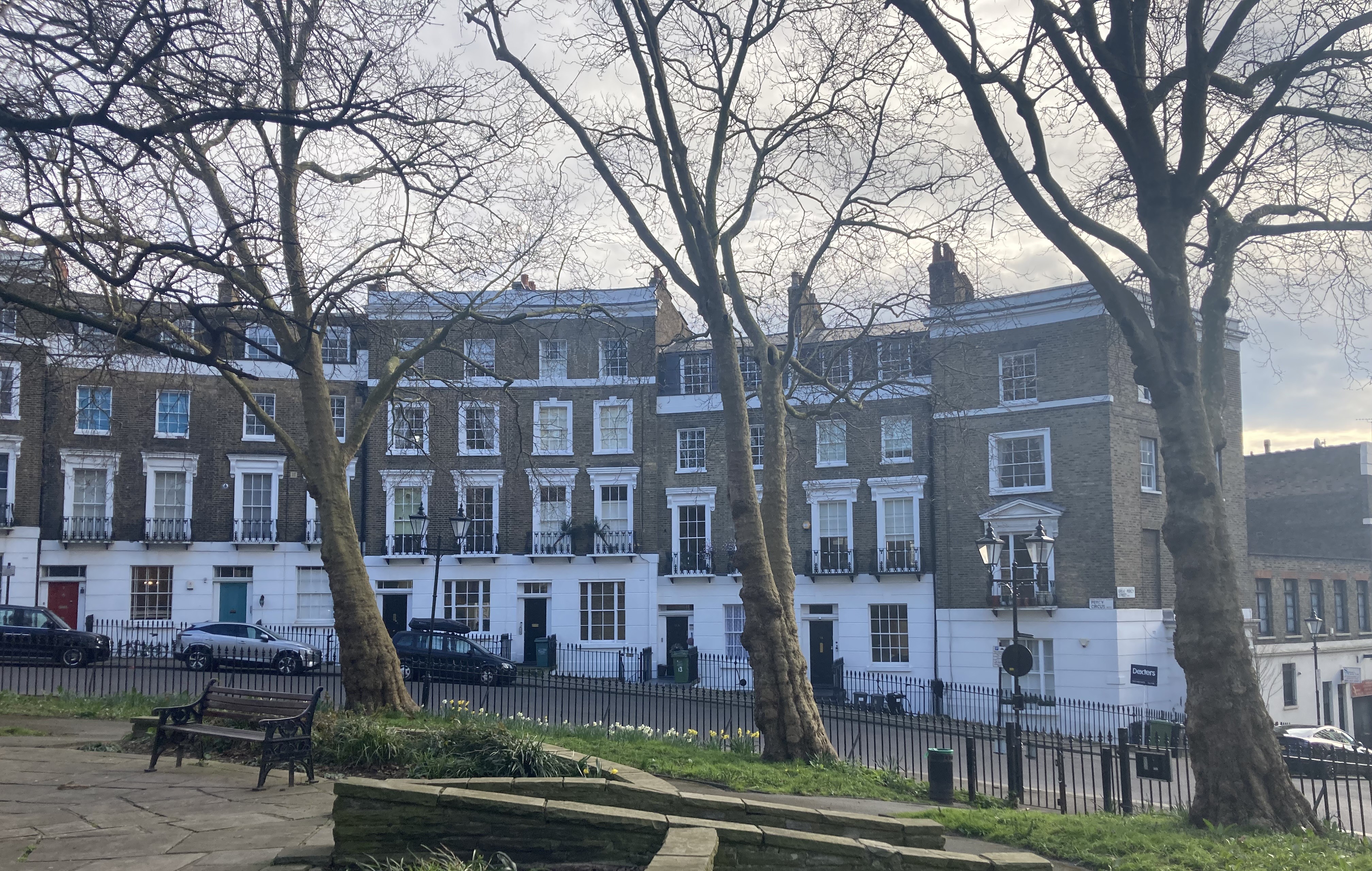
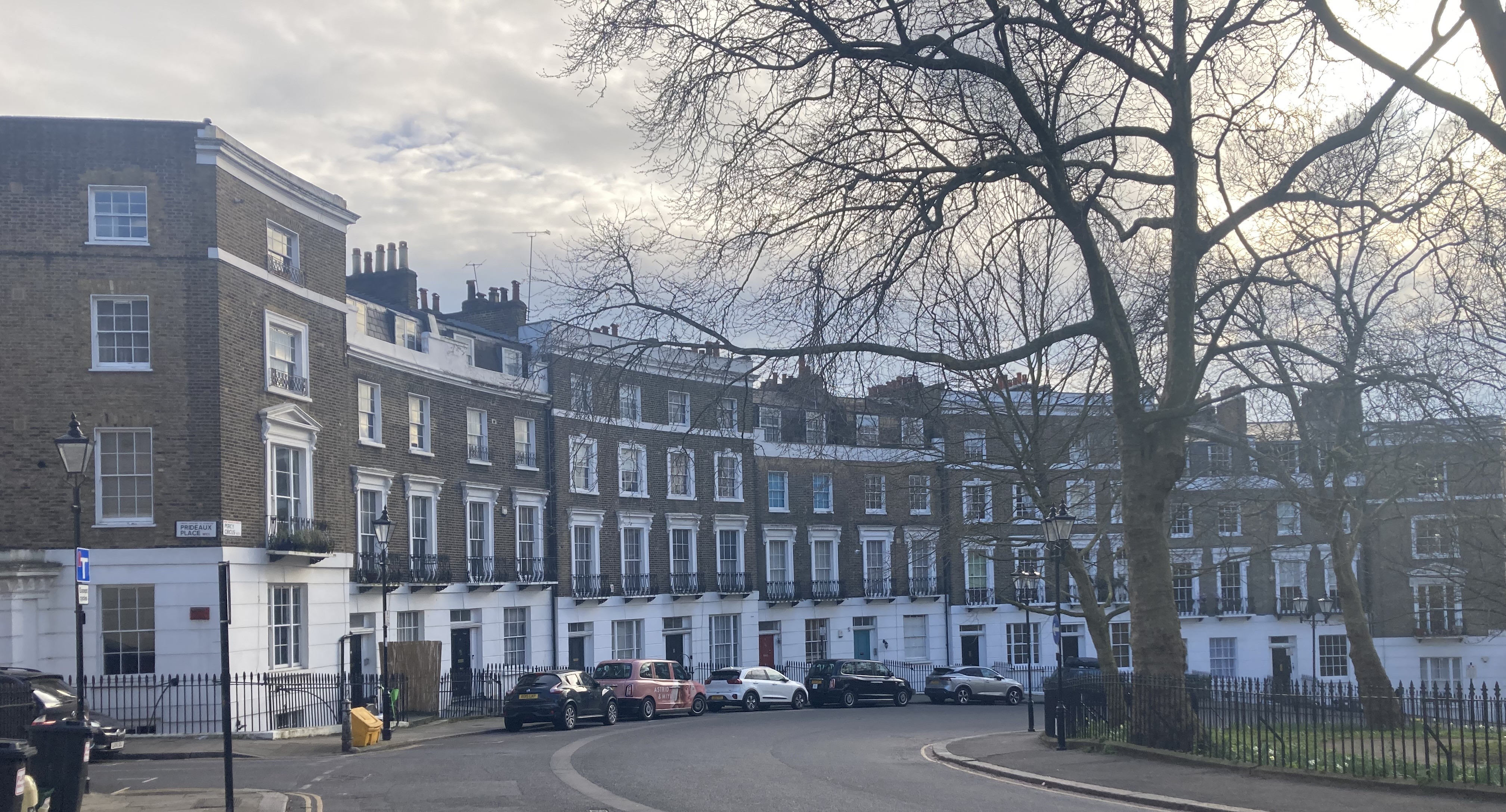
In 1841 the company began work on a hillside site under the direction of its surveyor, William Chadwell Mylne. Not completed until 1853 and named after Robert Percy Smith, a senior member of the New River Company, the circus consisted of 27 houses (15 of which were lost through bombing in the Second World War) in two crescents centred on an enclosed circular garden. Wander up either Great Percy Street or Vernon Rise from King’s Cross Road and the wondrous span of the circus begins to reveal itself. The houses follow the slope with each sitting slightly higher than its neighbour. The ground floor levels are in white stucco giving way to London brick for the next two stories, then a stucco string course before the attic storey. On the first floor all the windows have simple pediments except for the houses at the end of the terraces, which are graced with shallow triangles. At the third storey the windows are square before a return to rectangular, this time much squatter, in the attic.
At this point you might be forgiven for thinking, ‘so what? It’s just like hundreds of terraces, crescents and squares in London’. And that’s actually part of the point. Here, in Percy Circus, is a perfect example of the simple elegance of Georgian, Regency and early Victorian London. But Percy Circus’s rising hillside site and the fact that it sits just a London brick’s throw from the busyness of King’s Cross and St. Pancras stations and the traffic of Euston Road seems to underline its tasteful, timeless grace and gentility. Even today the place still echoes with a May 1843 advert in the Morning Herald telling of the auction of ‘two capital residences of ten rooms each, in perfect repair, standing detached in neat gardens… being Nos. 5 and 6, Percy-circus, on a fine healthful eminence, and in easy distance from the inns of court, and midway between the City and West-end’.
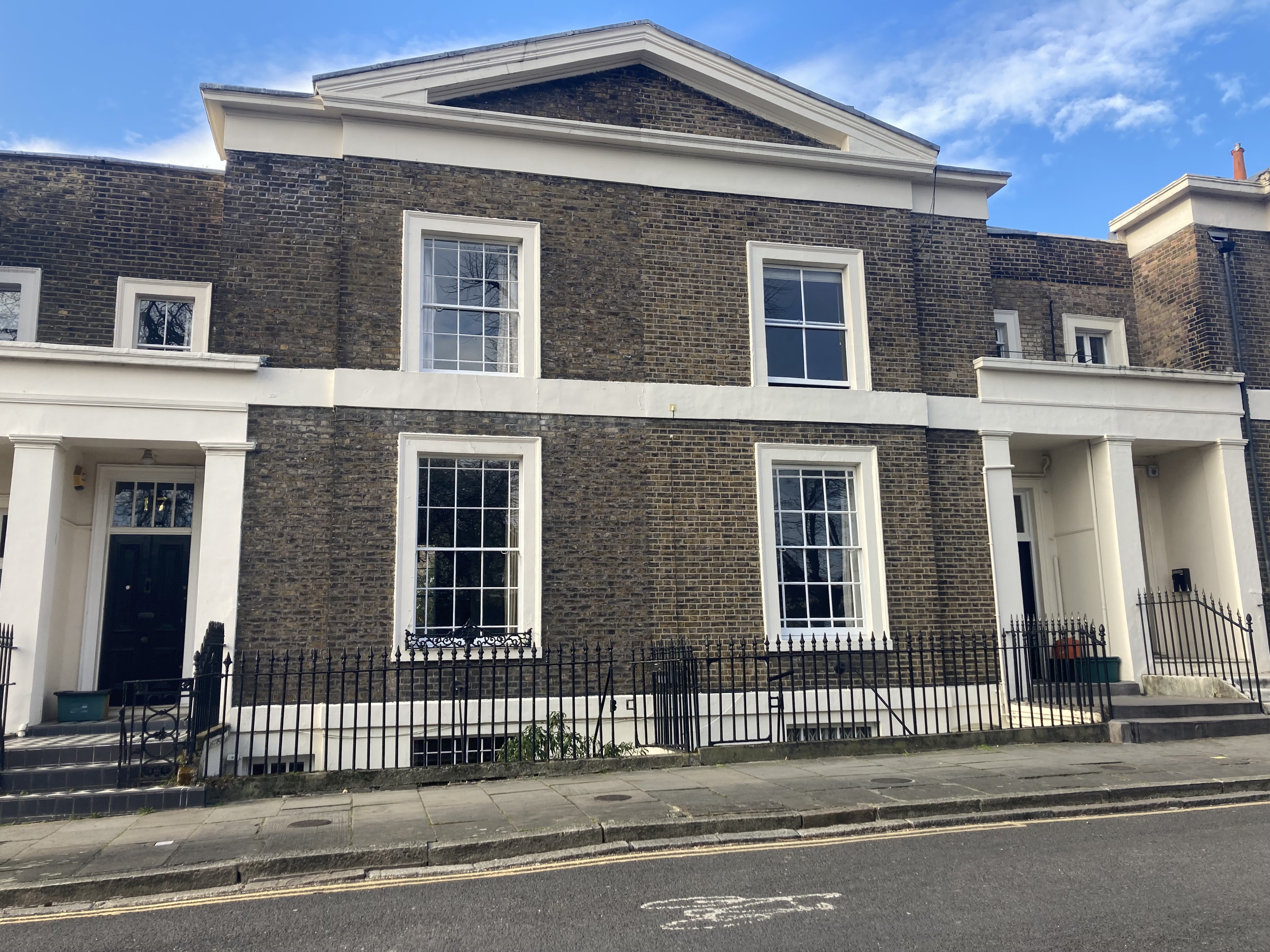
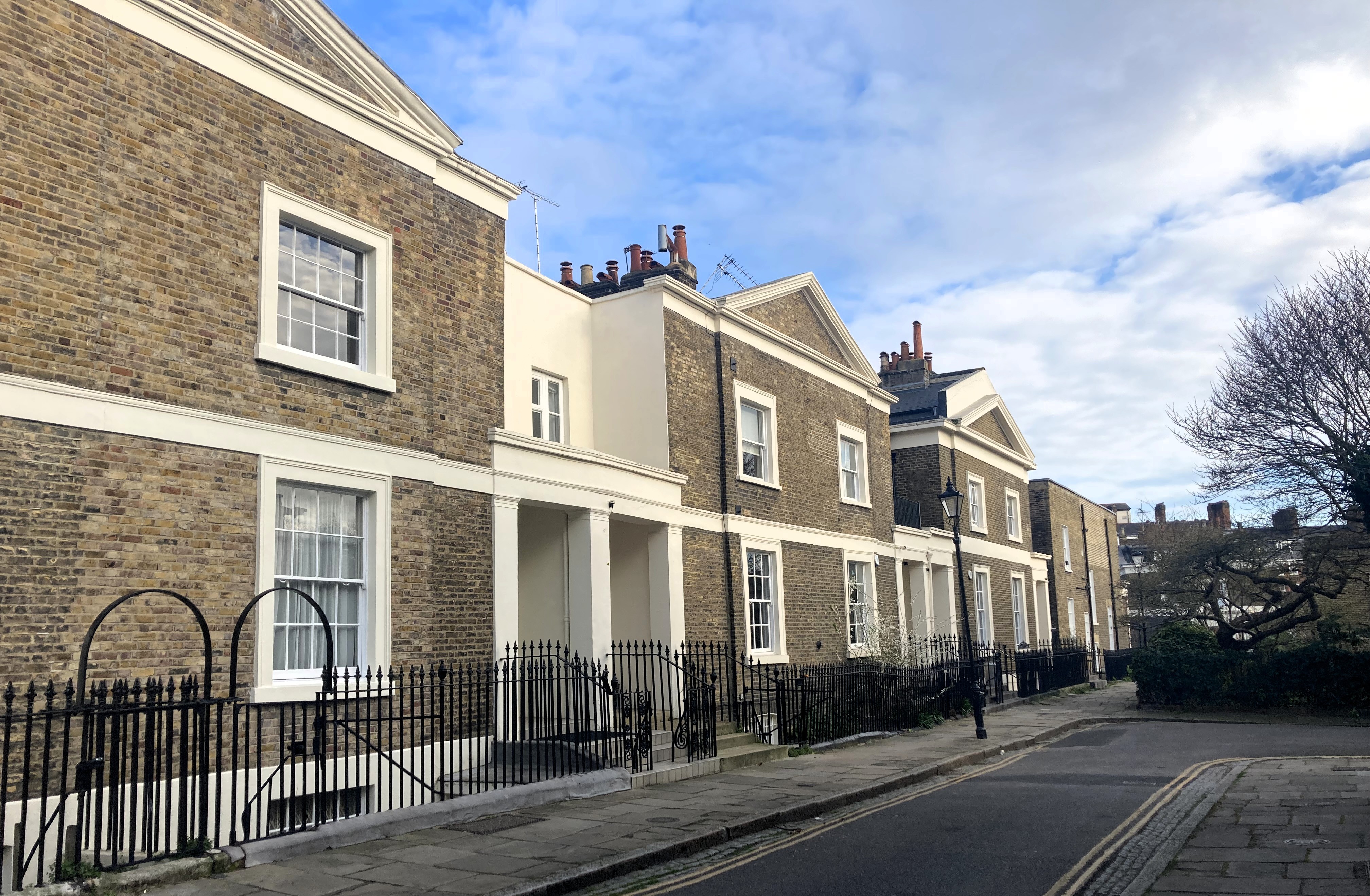
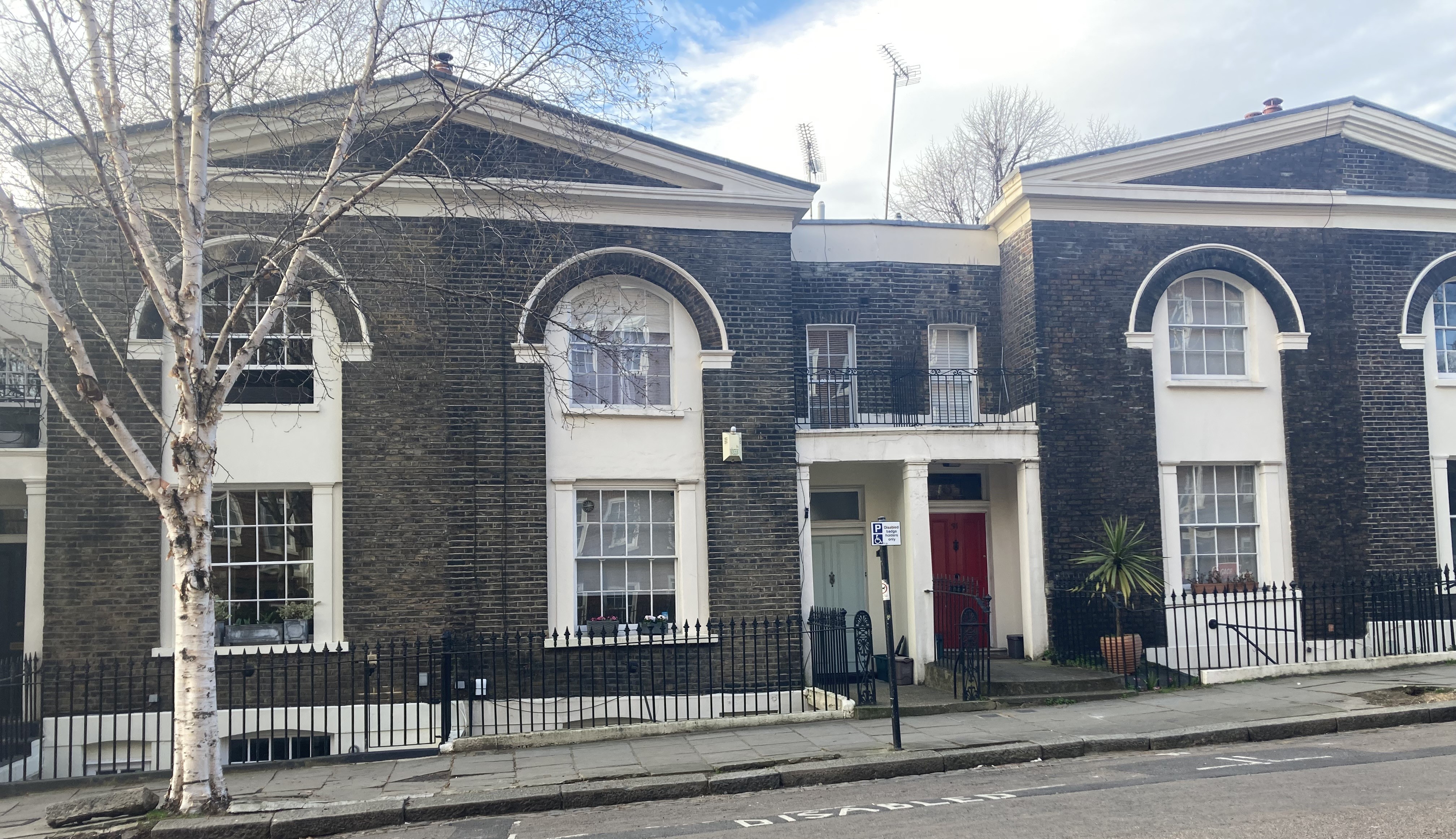
However, fine as Percy Circus is, it is merely our starter and not the main course. To get to this we must stroll across the circus and along Great Percy Street until the right hand turn into Cumberland Gardens is met. Here ground once owned by the Lloyd-Baker family is entered. Wander on and Lloyd Square suddenly emerges. Lloyd Square is absolutely stunning. Stunning because of the perfection of scale and symmetry. Stunning because part of the alchemy of the scale and symmetry is that the houses balance so wonderfully a sense of generosity of space yet wrapped up in the most beautiful and tastefully modest of packages. The genius behind the design was the team of John Booth, surveyor, and his son, William, an architect, who laid out and built the square and surrounding streets between 1822 and 1832.
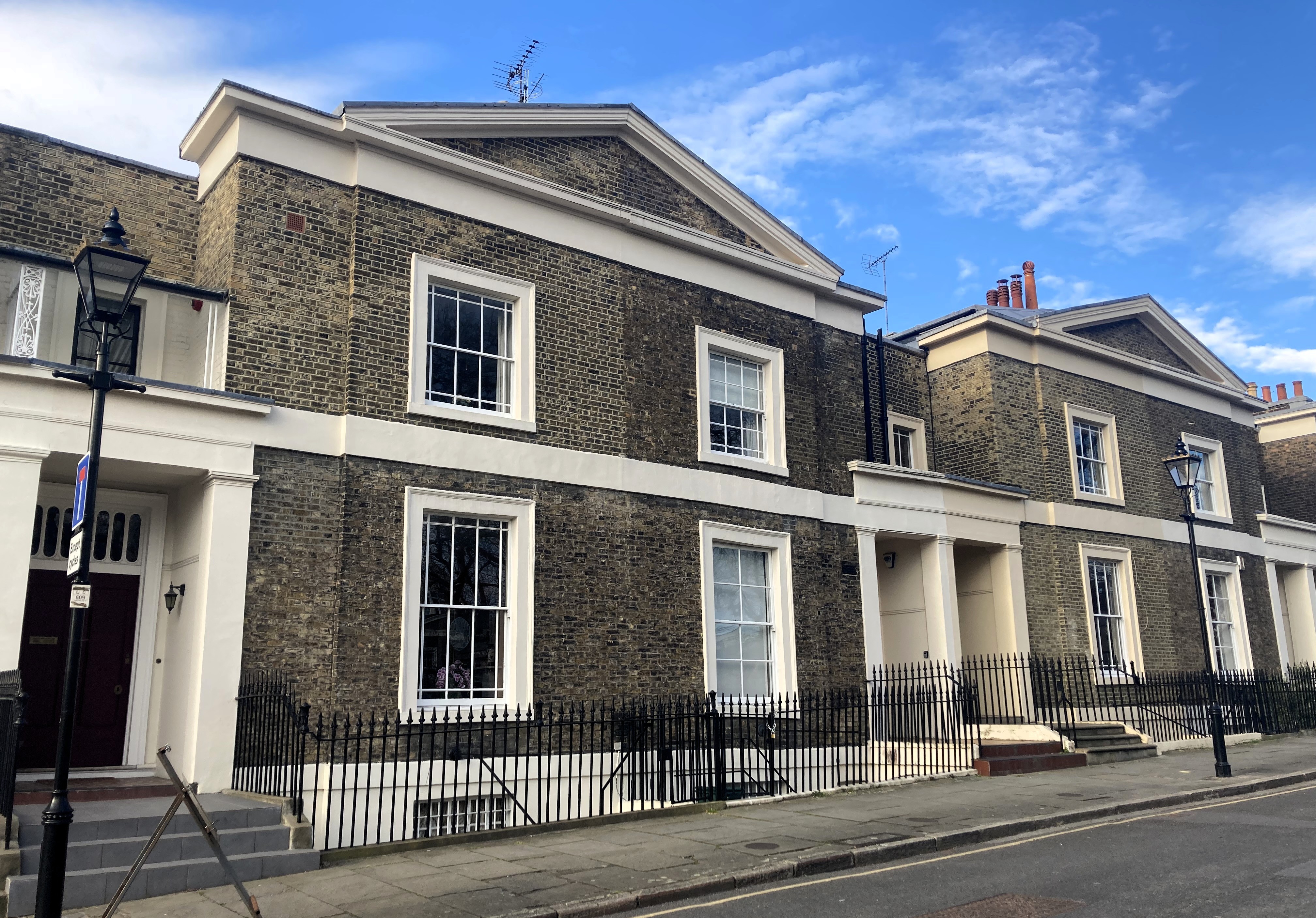
What hits the eye in Lloyd Square, Wharton Street, Lloyd Baker Street and Cumberland Gardens is a series of semi-detached houses. Each individual house is square in shape but becomes a rectangle with its partner. This is a lovely sleight of hand because, at first glance, it gives the impression that it is a series of detached villas, rather than a terrace. The houses are over three stories, including a basement level. The entrances are set at the top of a short flight of steps, and the doors are recessed in broad-lintelled white stucco porches. The lintel level then becomes a string course across the two stucco-framed windows of the ground floor. Another stucco course forms the base of the triangular roof. Between the stucco is fine yellow London clay bricks laid in Flemish bond. As these details sink in another wonder begins to become apparent, which is the effect of two seemingly incongruous forces. On the one hand there is a delicacy and lightness of touch, but on the other, there is a sense of mass and bulk created by the low profiles. What brings everything together, what makes everything work, is the style deployed by the Booths – Greek Revival. There is nothing so refined as Greek Revival. It is so charming, so elegant, and oh so civilised.
Who’d have thought that a short diversion from King’s Cross Road would produce such a sense of joy and such a sense of calm? Come on a London walk with me and find out for yourself.